US-Objectives in Iran: Surrender or Early Exit?
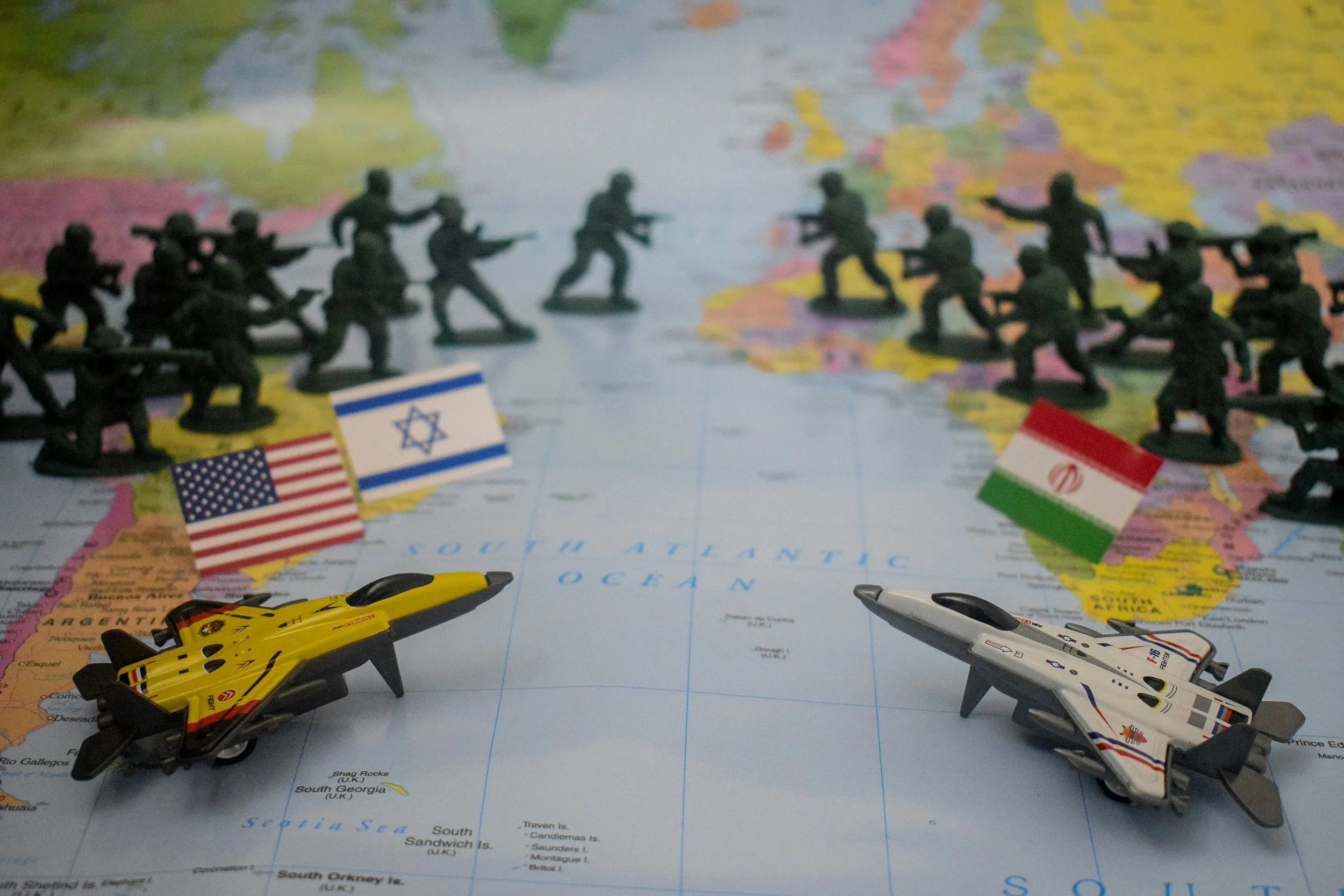
President Trump has demanded the “unconditional surrender” of Iran. At the same time, he has claimed that the war would be over within four—and later six—weeks. Republican Senator Tommy Tuberville added that the “conflict should be very short and sweet”. The President later even referred to the war in Iran as a “short-term excursion”.
Genuine Regime Change is Unlikely
A complete regime change through an air campaign alone appears unlikely, given Iran’s deeply entrenched political structures. A genuine revolution that does not leave at least parts of the old system intact would require far more than a simple reorganization of the administrative apparatus or the replacement of one group of rulers by another faction from the old elite.
A true revolution would have to create a fundamentally new state with different values, myths, social structures, political institutions, and a different composition of the political community. New identities would need to be formed and the parameters of political activity reorganized, leading to a fundamentally new political order.
Although dissatisfaction and resistance among the Iranian population will not disappear, the conditions for such a radical transformation are currently absent. In contrast to the revolution of 1979, there are no organized political forces capable of overthrowing the regime. In 1978, religious groups were well organized through mosques across the country; the communist Tudeh Party possessed strong party structures; left-wing intellectuals were organized within universities; and small businesses in the bazaars collectively opposed the Shah. No comparable organized opposition is visible in Iran today.
Iran’s Complex Political System
Iran’s political and security apparatus is extensive and complex. In addition to the newly elected Supreme Leader and his office, there are powerful institutions such as the National Security Council and the recently created Defense Council, the Guardian Council, the Revolutionary Guards, the Basij militias, the regular army, a relatively independent judiciary, and sixteen intelligence agencies.
There are also elected bodies such as the President, the Parliament, and the Assembly of Experts. Each institution contains multiple layers of decision-making. An externally imposed leader—such as the son of the former Shah—would not be capable of implementing the necessary changes within this system. Similar attempts failed in Afghanistan and Iraq.
More Modest Goals Were Repeatedly Disrupted
Unless Iran unconditionally capitulates, the existing regime—or at least parts of it—would continue to function. The objectives of the United States might therefore be more modest. For example, Iran could be compelled to accept Trump’s original conditions: terminating its nuclear and missile programs and ending its regional involvement.
Negotiations on the nuclear issue had come close to an agreement shortly before Israel and the United States began striking Iran on February 28. A recurring pattern can be observed. Israel made considerable efforts to undermine the 2015 nuclear agreement, which President Trump eventually abandoned in 2018. When negotiations resumed with some progress in Vienna in 2021, Israel attacked Iran’s nuclear facility in Natanz, after which Iran began enriching uranium to sixty percent.
In June 2025, talks on the nuclear issue were scheduled to enter another round before Israel and the United States launched their attacks on Iran. A positive outcome could have led to sanctions relief, which Iran would have been obliged to use to improve the living standards of its population.
The Illusion of Short Wars
The expectation that wars can be kept short may be illusory. Historical examples suggest that such conflicts can last considerably longer. NATO’s air campaign against Serbia during the Kosovo conflict in 1999 lasted four months and ended only when NATO assembled 40,000 troops for a possible ground invasion. NATO’s air war against Libya in 2011 lasted seven months before rebels on the ground captured the capital.
So far, the United States does not intend to deploy ground troops to Iran, and there are no armed rebel forces capable of advancing on the regime. If the air campaign continues, civilian targets may increasingly be struck, either deliberately or accidentally. There is no rational reason for opponents of the Iranian regime outside the country to celebrate the destruction of civilian infrastructure and the growing number of civilian casualties. The destruction of cultural heritage is another potential consequence of this war; President Trump already expressed such intentions during his first term.
“Cut and Run”
Even asymmetric warfare involving overwhelming military superiority can last for many years and does not necessarily lead to victory for the stronger power. After intensive bombing campaigns against North Vietnam in 1967, the United States discovered that North Vietnamese forces and the Vietcong had escalated the war beyond conventional battlefields.
When North Vietnamese General Giap was asked by an American general why the United States lost the Vietnam War despite winning every battle, he reportedly replied: “That’s meaningless.” The United States ultimately lost the war. President Nixon negotiated with the Vietcong and eventually withdrew U.S. troops, partly due to strong domestic opposition.
A similar pattern occurred in Afghanistan. During his first term, President Trump negotiated a troop withdrawal agreement with the Taliban, which President Biden later implemented after twenty years of war. Although Israel might prefer that the United States continue fighting until the Iranian regime is destroyed, it cannot do so without sustained American support.
Exit Strategy
This situation may offer President Trump a potential exit strategy in Iran. “I want a leader who would do a good job,” he stated. In principle, this could mean any government—even remnants of the current regime. If the strategy proves unsuccessful, responsibility could then be shifted elsewhere. Trump has already suggested that it would ultimately be up to the Iranian people themselves to overthrow the regime.
Similarly, President Nixon transferred final responsibility to South Vietnam. Some U.S. decision-makers have also proposed involving the Arab Gulf states more directly in the conflict, potentially enabling the United States to disengage at a later stage. Any new government, however, would almost certainly need to maintain friendly relations with the United States and recognize Israel.
Is a Less Repressive Government Possible?
So far, no such reform-oriented faction within the system appears to be emerging. Nevertheless, this possibility cannot be entirely ruled out in the future. The current elected leader, Mojtaba Khamenei, signals continuity in a defiant political line. It remains uncertain, however, whether he could generate new domestic political dynamics. His political future—and even his personal safety—cannot be taken for granted.
It is also possible that other, more reform-oriented branches of the political-security apparatus could gain influence. Such a development might open the path toward a less repressive government that would give citizens greater space to push for further political reforms.

Heinz Gärtner unterrichtet an der Universitäten Wien. Er war Direktor des Österreichischen Instituts für Internationale Politik. Er leitet den Beirat des International Institute for Peace (IIP). Er hatte mehrere internationale Forschungsaufenthalte und Gastprofessuren unter anderem an den Universitäten von Stanford, Oxford, an Johns Hopkins in Washington und in Deutschland. Er publizierte zahlreiche Bücher und Artikel zu Fragen der USA, internationaler Sicherheit, Abrüstung und Rüstungskontrolle. Unter anderem ist er Herausgeber des Buches "Engaged Neutrality" (Lexington).