The world order is no longer unipolar nor in a bipolar stage. What now exists should be called the Multipolar World Order 2.0. A new stage of multipolarity is evident in the Eurasian continent. It is heralded by China’s superpower status, which aims to stand the main pole in Eurasia’s east, the restoring great power status of Russia, which actively challenges the West in indirect war between the NATO and Russia for Ukraine, the rising big power India, which independently pursue its own national interests working with the West, North, and the East, contradictions between the US, the EU, and the UK mostly on Ukrainian and Chinese issues. In this process, Turkey, Iran, Israel, the DPRK and other middle, small but ambitious states also play an active role, looming large and challenging great powers' interests for implementing their own geostrategies.
In this Multipolar World Order 2.0, China, the US, and other competing powers will contend across the Eurasian supercontinent, primarily in East and South Asia, Central Asia, the South Caucasus, the Middle East, and even Central and Eastern Europe. This struggle will manifest in hot or proxy wars in fragile regions. Ukraine, Nagorno-Karabakh, Gaza, Lebanon, Yemen, Syria, and Iran have already been arenas of conflict. International norms and laws are and will be introduced in different ways. To justify their actions in different parts of Eurasia, the powers will appeal to principles of sovereignty, territorial integrity, and self-determination. However, the rules and legalities will play a secondary role, with states' political, economic, and military capabilities being decisive. This tough competition between great powers asserting their spheres of influence will entail weaponized sanctions to secure technologies and exclude opponents from markets, controls over high-technology distribution, restrictions on financial activities, and battles for influence in international organizations. Small states may have little or no room to choose or man oeuvre. This will only mean continued instability across Eurasia. They will be under pressure to choose a side between competing poles, which will threaten their agency. In the Multipolar World Order 2.0, as has already happened between the West and Russia and is now happening between the US and China, economic interconnectivity will be disrupted or called into question by geopolitical or ideological differences. These trends will lead towards new wars and conflicts. Cyberspace becomes a new battlefield where super, great, middle and small powers compete.
Multipolarity 2.0 in Eurasian International Relations
The West
In the stage of a Multipolar World Order 2.0. The non-Eurasian US still plays a significant role on the continent through NATO, military bases, and alliances with countries across Europe, Asia, and the Middle East. Nevertheless, it is no longer the dominant power. One of the critical moments in Eurasian multipolarity is the US and China competing to expand their political and economic influence across Eurasian regions and secure these markets. For this reason, the United States announced its strategy of turning to the Asia‑Pacific region and created two mechanisms to contain China: The Quad, comprising the United States, Australia, India, and Japan, and AUKUS, comprising Australia, the UK, and the US. These continuously worsen bilateral relations between Western (the US) and Eastern (China) superpowers, which are the most crucial in the current Eurasian international relations. Analysing the facts mentioned above, it is evident that the United States uses the Theory of Offensive Realism against China, seeking to hinder its further development and isolate it. Washington aims to prevent Beijing from implementing Realism’s Power Transition Theory and becoming the world’s hegemonic power in its place. The United States’ pressure on China pushes Beijing closer to Moscow.
Some voices in the EU argue that organizations must play a more independent role in the Multipolar World Order 2.0. French President Macron is the main promoter of this idea. If, in the Russian case, the EU was fully supporting President Biden’s policy on the Ukrainian issue, it is against President Trump’s policy and is trying to press Washington to continue the previous administration’s policy. In China’s case, the EU is trying to differentiate its position, keeping ties with Beijing as partner, competitor and systematic rival. The EU anticipates China will press Russia to withdraw its troops from Ukraine. Regarding Taiwan, the EU remains fundamentally committed to the One China Policy and does not challenge it. However, the EU is concerned about China’s 17+1 format (for now 14+1), which includes also 9 EU member states, some of which, like Greece and Hungary, actively cooperate with Beijing. The format allows China to gain influence in the Central Eastern European countries, creating competition with the EU. Therefore, there are disagreements among EU member states regarding relations with China, and their behaviour does not always align with Brussels's official statements. Nevertheless, despite political disagreements, China and the EU are interested in increasing economic relations.
However, the EU still plays a vital role in Eurasian international relations and will remain a centre with the capacity for further enlargement.
After Brexit, the UK also has more room to man oeuvre and to implement an independent foreign policy without looking to Brussels. Therefore, the European subcontinent has two Western centres, London and Brussels. The UK is the US’s main ally, but London also disagrees with Washington’s changing approach to the Ukrainian issue and is interested in maintaining business with Beijing, which has been declining due to tense political relations over the last few years. The UK seeks to collaborate with China in the economic, climate change, and disease prevention spheres, as well as to stop the war in Ukraine. Nevertheless, the UK is also a part of AUKUS, which aims to deter China in the Asia-Pacific. It seems that the UK and China can follow the same model as Japan and China, keeping political differences separate from economic relations.
Russia
Russia is situated in the centre of the Eurasian continent. It aims to keep its influence in post-Soviet Eurasia. It started a war with Ukraine, aiming to stop the enlargement of NATO towards the East. Moscow is also active in Africa. However, the ongoing war in Ukraine and sanctions have changed Russia’s positions in the Middle East, South Caucasus, Central Asia, and Eastern Europe. Nevertheless, Russia still remains a vital centre that maintains its position through the Eurasian Economic Union (EAEU), the Collective Security Treaty Organization (CSTO), and hard power. Russia also uses its gas and oil to strengthen its influence and create interdependent relations with buying states or weaponizes these natural resources when it faces adversaries. Because of the Russo-Ukrainian war, Eurasian economic interdependence was harmed. This fact again proves that the modern world is very connected and developments in any region of the Eurasian continent have a direct influence on the entire world. The recent enlargement of the Shanghai Cooperation Organization and BRICS+ also allows Moscow, together with Beijing, to expand its influence across Eurasia, Africa, and South America. China and Russia announced that their cooperation has no limit. China and Russia need each other. China is a state economy. Now, it is the world’s second‑largest economy. It needs a reliable energy resource supplier to keep development and weapons for securing its political and economic system. In turn, Russia gets its finances mainly from the trade of energy resources and weapons, which provides it with an opportunity to maintain stability and continue its indirect war with NATO for Ukraine. Uniting their capabilities, Russia and China are getting an opportunity to implement a balance of powers in the Eurasian continent and compete with the United States. China and Russia agreed on a comprehensive strategic partnership of coordination for a new era, which, as they like to mention, has no limits. Further, China and Russia will continue to deepen their partnership in different regions of Eurasia to deter the West. Taiwan’s issue can stand as the primary detonator. If the war starts in Taiwan and the US continues pressing China through AUKUS and Quad, Beijing will have only Russia and the DPRK as partners in this struggle. In this case, Russia will ask for direct supplies of armaments from Chinese stockpiles, which can be crucial in the Russia-NATO indirect war for Ukraine. Having Ukraine’s example, with disastrous consequences, Taiwan must tread carefully so as not to become a battleground for great powers’ clashes.
Another connecting link between China and Russia and other members of the EAEU is that in 2015, China and Russia agreed to conjunct the EAEU and Belt and Road Initiative (BRI). Moreover, in 2018, the EAEU member states and China signed an Agreement on Economic and Trade Cooperation between the Eurasian Economic Union and its Member States of the One Part and the People’s Republic of China of the Other Part. It means China and Russia have chosen cooperation over competition in post‑Soviet Eurasia, giving China a green light to work and invest in Central Asia, the South Caucasus, Belarus, and Russia.
China
China is the only superpower geographically located on the Eurasian continent. Beijing projects its influence across many economies in Asia, Central and Eastern Europe, the Middle East, and Post-Soviet Eurasia through its BRI geostrategy. Economic influence brings political influence to Beijing.
In the framework of the BRI, China has already invested more than US$380 billion to modernize and build Eurasian infrastructure. In the first phase of the BRI, from 2013 to 2020, China focused on completing groundwork projects that aimed to connect the East to the West and the North to the South. Most of these projects are now operational. The BRI is enabling China to establish a distinct economic, political, and technological hub, uniting countries from Asia to Europe. This project also provides China with the opportunity to boost export volumes and support the growth of its own industries. China invests its financial resources in participating countries through its own banks, resulting in profits and expanding its influence. The BRI is aimed at stabilizing neighbouring regions and countries, creating a security zone around China. Beijing is becoming a crucial hub for global relations and economics during the BRI forums. Leaders from various countries and international organizations convene to discuss current events, establish new agreements, and foster relationships. Within the BRI, China offers investments to Eurasian states to develop mainland and maritime infrastructure, technologies, innovations, and vaccines. China does not ask for ideological reforms or institutional changes in place of its investment, as the EU does when it provides investments. This fact makes cooperation with China attractive to many Eurasian states, particularly to dozens of Central Asian, South Caucasian, Middle Eastern, and Eastern European states, regions that are top priorities for Beijing.
India
India is standing as another centre in the Multipolar World Order 2.0. Considering its geographical location, its population of over 1.4 billion, possession of nuclear weapons, production of armaments, and a massive army, along with 7% annual GDP growth. In Southeast Eurasia, India has rejected the BRI, even complaining that the project passes through sovereign Indian territory without respecting territorial integrity. As a regional power, India considers South Asia to be under its sphere of influence and opposes growing Chinese influence in the region. The long-standing border dispute between China and India is also a contributing factor to India’s sceptical position. New Delhi cooperates with the US, Japan, and Australia to deter China, together seeking to balance power in the Asia-Pacific Region. However, India did agree to join the Asian Infrastructure Investment Bank, a key financing artery for projects in the BRI framework. India also cooperates with China within the SCO, BRICS+, and RIC frameworks. Therefore, this rising big power plays an independent game, maintaining cooperation and contradiction with the United States and China. It is trying to strengthen its positions in South and Southeast Asia and find new regions to expand its influence further. India gravitates step by step towards Central Asia, the South Caucasus, the Middle East, and Eastern Europe. For this, India uses the International North South Transport Corridor (INSTC), which it has initiated with Russia and Iran. The primary objective is to establish a connection between Indian ports situated in the Indian Ocean, Iranian ports located in the Persian Gulf, and Russian ports in the Baltic Sea. Compared with China’s BRI, INSTC is being built slowly, but its routes are gradually becoming important conduits. Moscow will pay more attention to developing INSTC. Because of the Russo‑Ukrainian war and conflict with the West, Russia is trying to deepen its relations with Iran and India and not become overly dependent on China. In addition to China, supplying energy to India, a large market in Asia, ensures a consistent flow of income from energy resources for Russia. Actually, in Eurasian International relations, time is working in Favor of both China and India. In the future, they will be more decisive and active in the politics of the Eurasian continent. These two powers must choose cooperation over conflict, as a war between them would be a total catastrophe for Asia and the entire Eurasian continent. The SCO, BRICS+ and RIC formats are still stabilizing their relations and providing platforms for problem-solving. Bilateral trade between China and India is also growing. However, in the Sino-Indian competition for spheres of influence in the Asia-Pacific region, India’s cooperation with Japan and its participation in the Quad can bring tensions and clashes with China.
In sum, there are two superpowers in Eurasia- geographically non-Eurasian US and Eurasian China, three great powers-Russia, the UK, and the EU, and one big power, India. Middle powers such as Turkey and Iran also play an active role. Therefore, the Eurasian continent is currently in the Multipolar World Order 2.0, with multiple centres. Of course, the US, the UK, and the EU can still be called the collective West, but in the era of Multipolar World Order 2.0, these powers do not always agree on their foreign policy goals. As mentioned, the UK and EU are not interested in harming their relations with China for the US, as they will lose a vast Chinese market for their production and services.
Multipolarity 2.0 in the Eurasian high-technology sphere
The US and China are leading in the high-technology sphere, while Japan, South Korea, the EU, India, and Russia also play essential roles.
These powers compete for high-tech markets across different regions of the Eurasian continent. The main competitors are China and the US. In several spheres, such as the production of digital data and the development of AI, China is the leading power. In turn, the US is leading in the design and production of semiconductors and chips. These technologies are crucial in today’s civilian and military production sectors. China also still heavily relies on Microsoft’s Windows operating system.
China signed a Memorandum of Understanding with Eurasian states to cooperate in constructing the Digital Silk Road (DSR). As part of this agreement, the parties agreed to establish a bilateral e-commerce cooperation mechanism and to build a cross-border e-commerce platform. To stop China’s expansion into high-tech markets through its DSR in the Multipolar World Order 2.0, Washington imposed sanctions on Chinese high-tech production companies. The EU also tightened its rules, creating difficulties for Chinese investments in the EU’s AI, semiconductor, and robotics sectors.
Nevertheless, even under US pressure, China has achieved results and established its presence in post-Soviet Eurasian, Middle Eastern, Central, and Eastern European markets through its DSR. As I argue, China needs the Eurasian regional markets both to sell its high-tech products and to ensure that its own companies and digital standards stand at the core of Eurasia’s advanced technologies.
The EU, South Korea and Japan have a history of making high-quality technologies. In turn, Russia is attempting to revive this sector through protectionism, which was left in an unsatisfactory state after the collapse of the Soviet Union.
Rising big power India is already among the world’s largest suppliers of Information Technology products and services. It exports 11% of global computer services. With the capability to produce Big Data, India aims to become a leader in AI. India also announced its capabilities and ambitions when it successfully landed the Chandrayaan-3 spacecraft on the Moon’s surface. Therefore, the high-technology sphere, which plays a crucial role in the 21st century, is also becoming multipolar.
Multipolarity 2.0 in the Eurasian financial sphere and China
The Eurasian financial system is evolving in accordance with the logic of Multipolar World Order 2.0. Chinese, Russian, and Indian currencies are increasingly being used for international transactions in place of dollars or euros, particularly for buying Russian and Iranian energy resources or for bilateral trade between sanctioned countries. China connected the internationalization of the Yuan with the BRI. Therefore, it could involve its currency to provide loans and investments to BRI participating states, strengthening its currency’s position internationally in a short period of time. China’s digital Yuan, controlled by the People’s Bank of China, also provides an opportunity to internationalize Chinese currency, as it is linked to financing for the BRI. China has urged Middle Eastern countries to use the Yuan as their trading currency for oil and gas. As a result, in 2023, China signed its first LNG contract in Yuan with the UAE. Iraq's Central Bank announced it would trade with China in Yuan. This country is the third largest exporter of oil to China.
Russia shifted from selling oil and gas to China in dollars to selling it in Yuan and Ruble. It means that the Yuan is gradually becoming one of the international currencies used in the oil and gas trade. By utilizing the Ruble as its currency for oil and gas sales, Russia is strengthening and stabilizing its currency.
In the Multipolar World Order 2.0, not only do Visa and Mastercard play a role in payments in the Eurasian continent’s financial markets, but also Chinese UnionPay International and Russian Mir card payment systems are steadily strengthening their positions.
In 2012, Iran was cut off from the SWIFT global financial messaging system for the first time due to EU sanctions caused by the Iranian nuclear issue. In response to this situation, to stand independent of Western financial transaction systems, in 2015, China established its Cross-Border Interbank Payment System and promoted it through the BRI. In turn, Russia established its System for the Transfer of Financial Messages after its leading financial organizations came under sanctions starting in 2014, and it needed an alternative system for processing financial transactions. Therefore, even if leading Russian banks are cut from SWIFT, it does not mean the Russian financial system is isolated.
Financial sanctions bring sanctioned states together, fostering cooperation through alternative payment methods. For instance, on January 29, 2023, Russia and Iran signed an agreement to connect Russia’s System for the Transfer of Financial Messages with the Iranian SEPAM system. In 2019, the EU established an Instrument in Support of Trade Exchanges for trading with Iran with humanitarian goods, except energy sources, as this sphere is under the US’s heavy sanctions after its withdrawal from the Joint Comprehensive Plan of Action in 2018.
This tendency is gaining some ground because of the fact that the US weaponized its currency and Western financial transfer systems. Therefore, there will not be hegemony in the financial market as it was before. However, the dollar will remain the strongest, given that it is the currency of the first economy and that oil trade is mostly conducted in it. The euro and the pound will maintain their positions, but the Yuan will strengthen its position in Eurasian international financial relations. Rubble and Roupie will also raise their shares in Eurasian international trade.
Multipolarity 2.0 in Eurasian Weapons Production
From the Eurasian continent, the 12 largest weapons exporters are France, Russia, China, Germany, Italy, the UK, Israel, Spain, South Korea, Turkey, the Netherlands, and Poland. The 12 largest weapons importers are Ukraine, India, Qatar, Saudi Arabia, Pakistan, Japan, Kuwait, the UAE, South Korea, the UK, Poland, and Israel. This means an arms race is going on in the Eurasian continent, and the fact that Ukraine stands as the primary importer of arms supports this.
The war in Ukraine has verified that German, French, British, and US weapons are effective, but also that Russian armaments can still struggle in its indirect war with NATO. Nevertheless, it was a surprise to see that Iran can produce high-quality Unmanned Aerial Vehicles (UAVs) and missiles, which are also of interest to Russia. In turn, the DPRK developed solid missile systems, which cannot be sold because of the UNSC sanctions but can produce for itself.
China also developed its vast production of contemporary armaments. China has an advantage in UAVs and robotic weapons production compared to other Eurasian states. Turkey also approved that its UAVs could change the situation on the battlefield. Now, it is exporting them to Ukraine, Azerbaijan, Qatar, the UAE, and other states. Israel is also playing a crucial role in high-tech weaponry production and exporting it mostly to India and Azerbaijan. Due to pressure from the US, Israel has suspended its military-technical collaboration with China.
The world’s largest importer of armaments, India, is also exploring opportunities to export its own weapons. Recently, it began exporting to Armenia, which is trying to diversify its weapons suppliers to avoid dependence on CSTO states.
Therefore, there is a multipolarity 2.0 in the spheres of arms production and distribution as well. New players are joining traditional weapons producers for competition in Eurasian arms markets. It is also worth noting that the non-Eurasian US is the leading arms supplier not only to Ukraine or the Eurasian continent, but also to the world.
This article is an updated and adopted version of the Conclusion the Eurasian Continent Is in a Multipolar World Order 2.0 Stage, published in Routledge in Routledge Handbook of Chinese and Eurasian International Relations. The Taylor & Francis Group has granted permission for this publication.
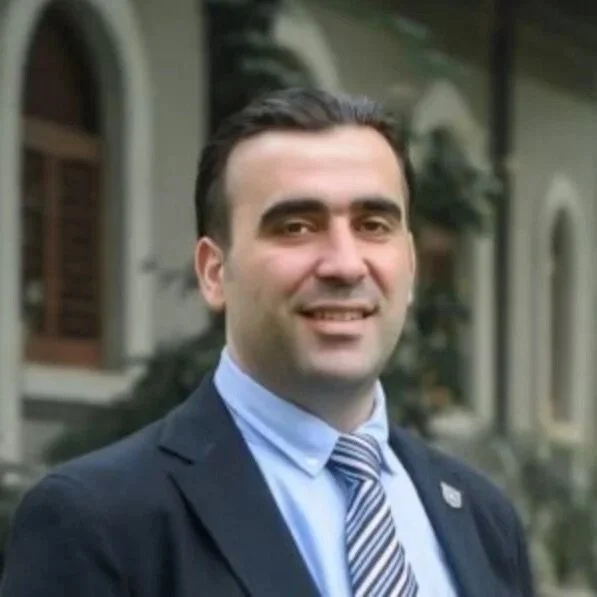
Dr. Mher D. Sahakyan is the founding director of the China–Eurasia Council for Political and Strategic Research in Armenia. He is the founding editor of Routledge Research in Eurasian Geopolitics Book Series. Mher was a Fulbright Visiting Scholar at the School of Advanced International Studies of Johns Hopkins University. He was an AsiaGlobal Fellow at the Asia Global Institute of the University of Hong Kong (2020/2021 and 2022) and a 2024 LEWI Visiting Fellow at the David C. Lam Institute for East–West Studies at Hong Kong Baptist University. Mher holds a doctorate in international relations from China’s Nanjing University. He is the Editor of Routledge Handbook of Chinese and Eurasian International Relations and China and Eurasian Powers in Multipolar World Order 2.0: Security, Diplomacy, Economy and Cybersecurity, published by Routledge in 2024, and 2023. He is the co‑editor of the Routledge Handbook of China’s Belt and Road Initiative in Eurasia (along with Kevin Lo) and China and Eurasia: Rethinking Cooperation and Contradictions in the Era of Changing World Order (along with Heinz Gärtner), published by Routledge in 2025 and 2021.