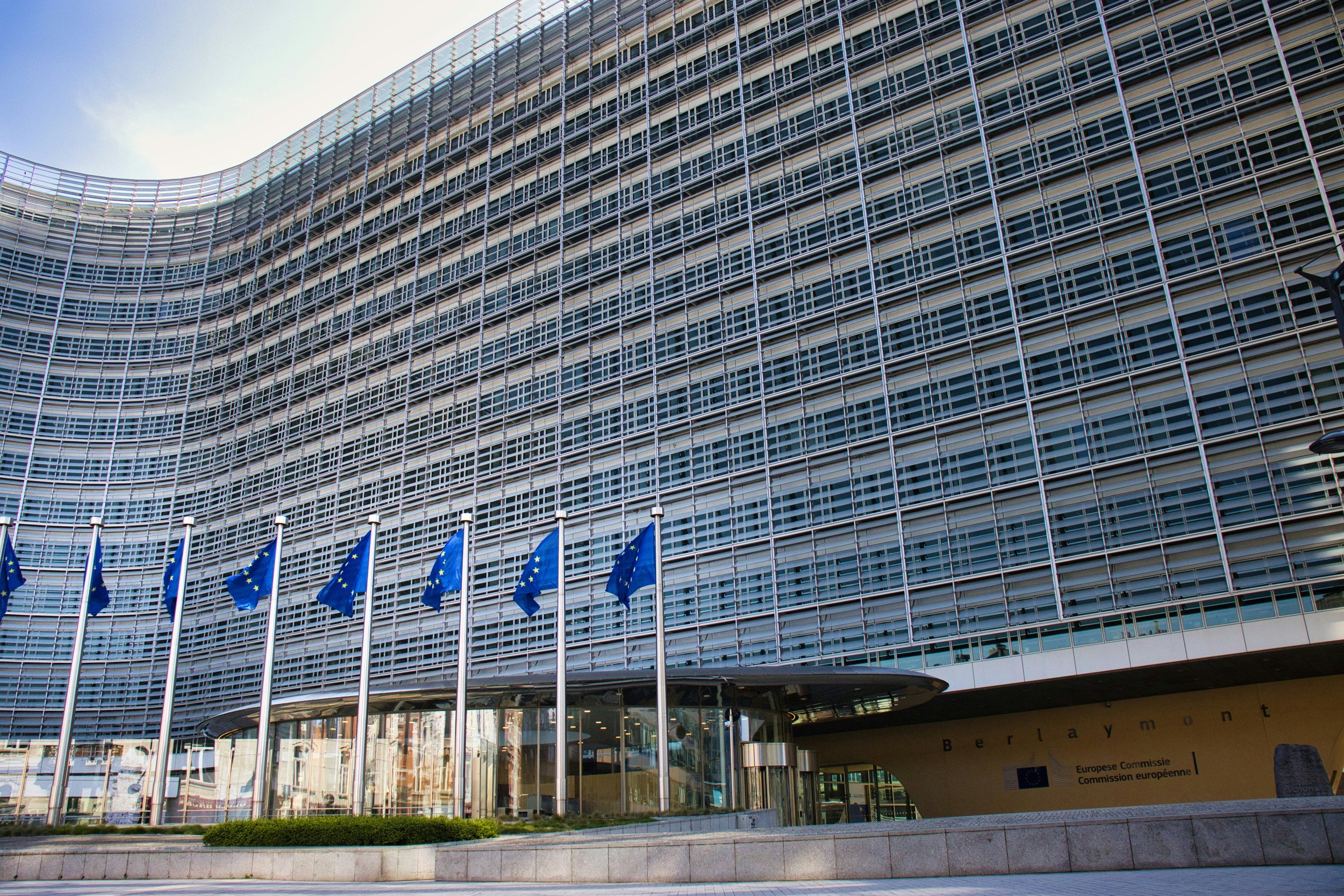
Recently a Western Balkans EU summit was held in the Montenegrin town of Tivat at the Bay of Kotor - the bay where Austria-Hungary stationed part of its military navy. The summit was deliberately held in Tivat as Montenegro is the country which has achieved good progress in the accession negotiations with the EU - although the country has a strong political anti-EU force. Nevertheless, the main issue discussed during the summit deliberations was not the evaluation of the progress made by Montenegro, but the question of how to design the future enlargement process as such. There is widespread acknowledgment that EU enlargement needs a new momentum. But unfortunately, also after this summit there is no courageous step forward visible - in spite of an initiative taken by France and Germany.
A “new” proposal
France and Germany proposed a new accession procedure. They took up ideas which have been promoted - for many years already - by different European institutes. The two countries proposed to develop a mechanism which would reach accession to the European Union in a staged process. In particular they referred to the letter recently drafted by President Vučić of Serbia and Prime Minister Edi Rama of Albania, in which they asked for a first step of EU membership without voting rights in order to make it easier to be accepted by existing EU members. (see my IIP publication „EU-Erweiterung - Mit Pragmatismus nach vorne“ and the English version „EU enlargement - Moving forward with pragmatism“ published by WIIW).
It was certainly important that two prominent members of the European Council brought new ideas to the table - or rather made old ideas known to other summit participants and presented them as a proposal for discussion. Nevertheless, there are some vital deficiencies in the proposal. One important deficiency is the fact that the paper presented accepts differences between the Western Balkan countries and Ukraine in their possibilities to approach EU membership. In addition, the paper remains unclear concerning Moldova’s path.
The French-German proposal is unfortunately not presenting a general framework for a common starting line for all candidate countries. It would be much better if all respective countries were given the same starting position. From this starting position the countries would proceed in their integration process according to the advancement of their domestic reform process and their readiness to accept the future membership obligations. The more a country is doing its job, the more advanced it would be in its EU integration. This accession mechanism would create incentives to speed up the reforms as it would give the respective country more rights and more financial support.
EU leaves space for others to interfere
It is true that such a differentiated process would create many practical difficulties of implementation. But Europe must finally act with a clear vision and strong determination. Such a firm strategy would be necessary to counter those influences which are clearly violating common European interests. As we can see, non-European powers use the vacuum and uncertainties about the way and timing of the integration process of different candidate countries with the EU. This concerns not only Russia and China but, in the meantime, also the United States or rather the Trump family which identifies itself with the US.
More and more Trump’s emissaries try to organize business investments - irrespective of or even in violation of European rules which candidate countries should respect and apply if they want to join the European Union in the foreseeable future. For example, the Trump administration is very active in selling US liquid gas and some fear that this gas infrastructure could also be used by Russia in case of a ceasefire in Ukraine. The United States and Russia have similar - and perhaps common - interests in dominating the gas supply for Europe. Even if it is necessary to invest in the regional gas network in order to guarantee a sufficient gas supply in the near future, this infrastructure is an important element of European security interests. Therefore, such an infrastructure should be built to promote European interests - for example in supporting the energy transition - and according to European competition rules.
What was then decided in Tivat?
It is difficult to know what has really been decided in Tivat. Council President Costa made some general remarks about “considering new ideas to streamline and accelerate the process” of enlargement. He demanded “full alignment of our Western Balkans partners with the EU’s Common Foreign and Security Policy.” Specifically, he mentioned that Montenegro should become the 28th member of the European Union in 2028. He underlined the progress made by Albania and mentioned the concrete calendar of the Serbian government concerning electoral and judicial reforms. In addition to the Western Balkan countries, he spoke about the unlocking of “the process for opening the first enlargement cluster for Ukraine and Moldova”.
But there is no clear definition of how to proceed generally with the candidate countries. Empty talks expressed by Council President Costa about the European Union as the “most reliable partner of the region” and that “the Western Balkans can count on our continued support” cannot replace clear and constructive decisions on how to bring an end to the long waiting time for the Western Balkan countries. The fact that most of these countries are not doing their job is another issue. But the EU should not deliver them excuses for their inactivity.
EU uncertainties lead to divergences
Uncertainties in the EU enlargement policy create a wide field of ambivalence and developments countering European interests. The fact that Serbia’s President is clinging to his power instead of promoting the necessary reforms should be clearly mentioned and criticized by EU representatives. And that Alexander Vučić uses the vacuum and the EU’s non-decisions to promote his intention to be everybody’s darling - even if this gets more and more difficult - should also be questioned. This balancing act and ambivalence in Serbia’s foreign policy are hardly compatible with the EU’s Common Foreign and Security Policy.
The fact that Kosovo’s Prime Minister Albin Kurti is neither finding a compromise with the opposition nor with the Serb minority must also be clearly defined as an obstacle for progress towards EU accession. The situation in Bosnia-Herzegovina is not really moving forward and the United States is using the ousted President of Republika Srpska, Milorad Dodik - as the Russians have already done for many years - to promote their interests instead of enhancing the unity of the country. The uncertainties regarding a future High Representative after the resignation of the present one are particularly painful. And as unfair as the Bulgarian demands vis-à-vis North Macedonia are, the country should be ready to accept “mediation” by EU members in order to be part of the EU accession process.
A clear overall strategy is needed
Not all these issues and problems could be - in a satisfactory way - dealt with by a concise and comprehensive enlargement process. But it would bring all countries to a common starting line and then it would be up to them how far and how fast they could move forward. The only way to prevent other countries from interfering in common European interests is by binding all the candidate countries already now by an association with the EU and its main policies.
The above-mentioned uncertainties and deviations from EU policies by some candidate countries are no arguments against an alignment with the EU in a first step. On the contrary, exactly this use and misuse of the general uncertainties by the candidate countries and some global powers is precisely an argument for a first step of an immediate alignment with the European Union. After this first step, which must - and here Council President Costa is correct - include the readiness to be part of the Common Foreign and Security Policy, all candidate countries have the chance to move forward beyond that minimum stage step by step - depending on their own reform steps.
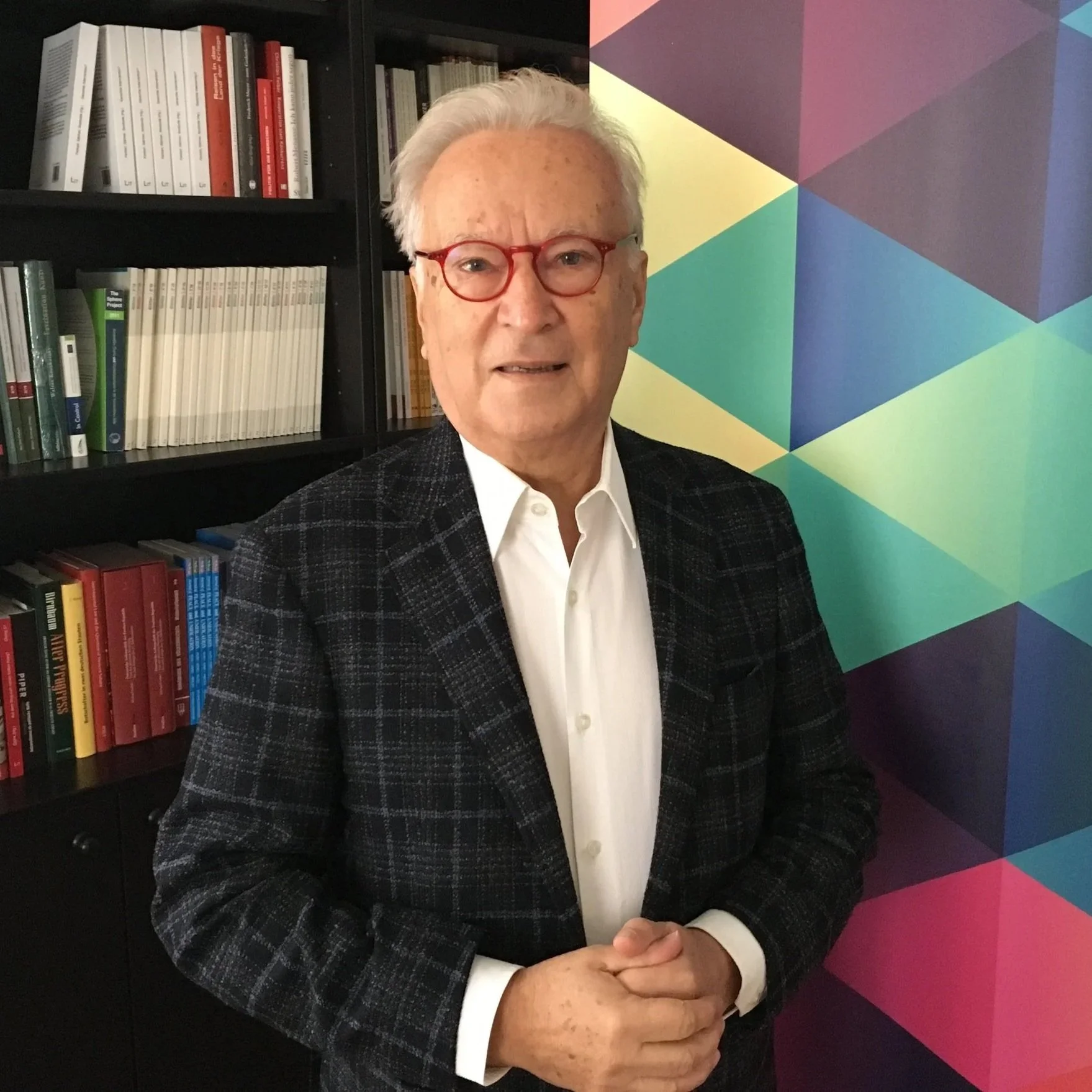
Dr. Hannes Swoboda, President of the International Institute for Peace (IIP), started his career in urban politics in Vienna and was elected member of the European Parliament in 1996. He was Vice President of the Social Democrat Group until 2012 and then President until 2014. He was particularly engaged in foreign, enlargement, and neighborhood policies. Swoboda is also President of the Vienna Institute for International Economics, the Centre of Architecture, the University for Applied Science - Campus Vienna, and the Sir Peter Ustinov Institute.