“We Will Find You and We Will Kill You.” This is precisely the quote President Donald J. Trump concludes the presidential foreword of his 2026 Counterterrorism Strategy with. Introduced in May of this year, this strategy is supposed to be the solution to all terror threats the United States are currently facing – after years of Biden’s “borderless” policies that allegedly fostered “left-wing sentiments.”
In the next section, referred to as “Good vs Bad Counterterrorism”, especially focusing on domestic terrorism, President Trump wants to address Americans that “have adopted ideologies antithetical to freedom and the American way of life.” While unclear how this American way of life is to be defined, historically, the United States have been characterised by diversity, opportunity and progressiveness. Thus, critics argue the action plan proposed by President Trump contradicts these inherent values.
At the same time, despite explicitly stating that this strategy shall never be used against citizens who simply disagree with the government’s politics but only against “real” terrorists, a document like this provides the exact legal framework that would be required to achieve just this.
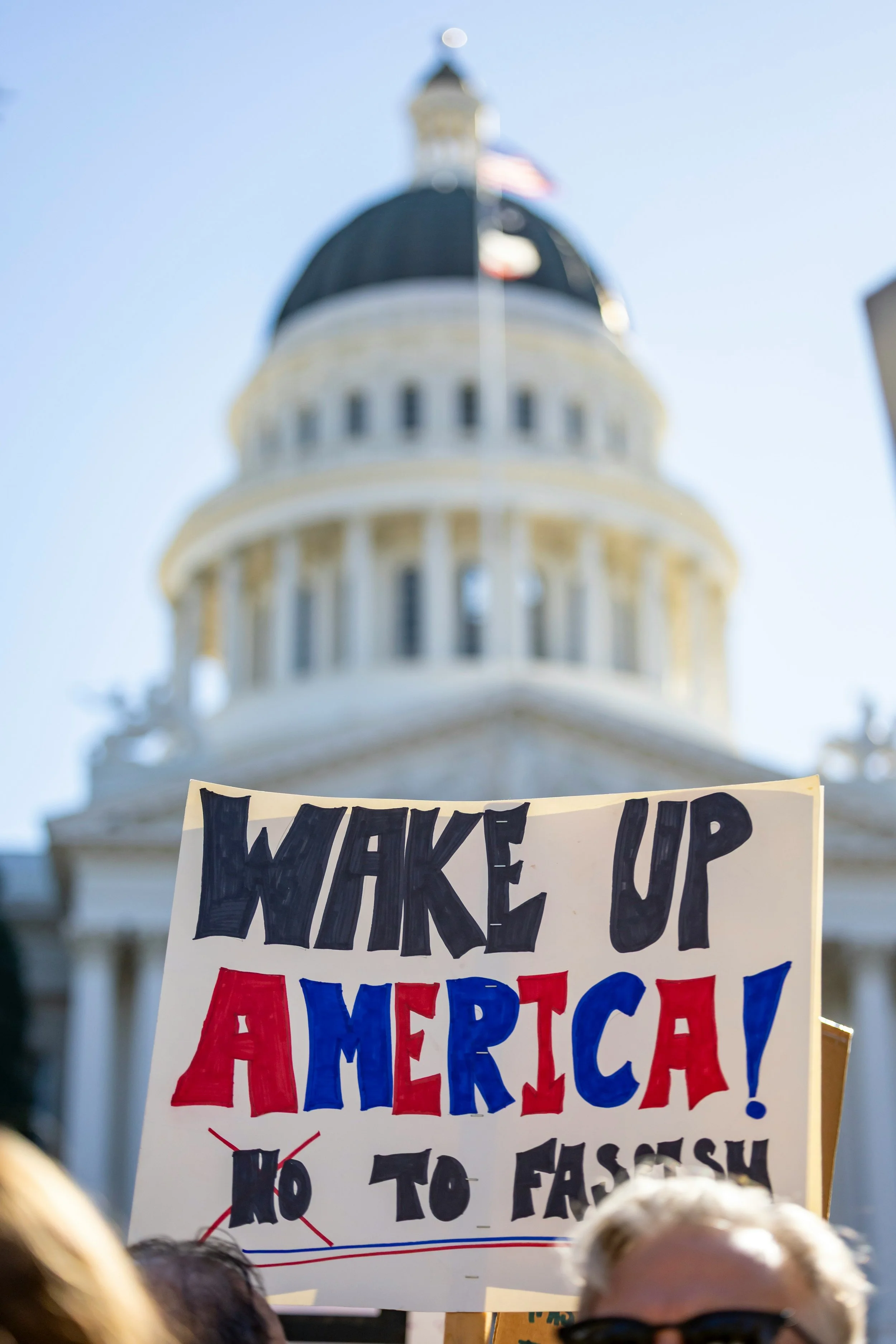
Targets of this action plan include, next to narcoterrorists, transnational gangs and legacy Islamist terrorists , also “Violent Left-Wing Extremists, including Anarchists and Anti-Fascists.” Surprisingly, there is no mention of right-wing extremists or fascists. While not expressly defined, these “violent Left-wing Extremists” are supposedly those people, who carry anti-American, anti-Western values that oppose “the principles upon which our [American] Republic was founded.”
To clarify, these constitutional principles, as already briefly touched upon, include popular sovereignty, separation of powers, federalism, republicanism and the Bill of Rights.
Anti-fascism is based on its opposition to nationalism, far-right ideologies, white supremacy, authoritarianism, racism, xenophobia, homophobia and fascism itself. Arguably, advocating against authoritarianism on the one hand corresponds with the constitutional principle of separation of powers as well as federalism. On the other hand, the idea of a limited government which guarantees equal rights for every citizen, supports the principle of sovereign popularity and the legal statutes enshrined in the Bill of Rights. Therefore, the question how exactly left-wing supporters or anti-fascists oppose the American values remains unanswered.
By not providing a legal definition of the terms “Left-wing Extremists” and “Anti-fascists”, the Trump administration also leaves significant, potentially dangerous leeway for law enforcement agencies. If one does not have clarity about whether their ideologies qualify as a terrorism threat under national legislation, how can one effectively seek legal protection or remedies? If indeterminate provisions like these are to be implemented, how does one make sure to not be the next target for simply believing in liberal democratic values? In light of these uncertainties, the Counter-Terrorism Strategy 2026 can be regarded as a calculated move against political adversaries.
Apart from extensive sections on transnational organised crime, Islamist terror groups and measures proposed against these, “Left-wing Extremists” are also accused of having caused a number of politically motivated killings of Christians in the United States. Explicitly, the assassination of Republican Charlie Kirk is mentioned and attributed to “a radical who espoused extreme transgender ideologies.” Correspondingly, groupings with an “anti-American, radically pro-transgender ideology” shall be persecuted by the Department of Justice or Homeland Security.
In contradiction to this government document, Tyler Robinson, who was tried for the assassination of Charlie Kirk in Utah, was neither transgender nor a documented “Left-wing Extremist.” According to official police statements, the accused is not affiliated with either political party and did not participate in the 2024 presidential election. However, he grew up in a conservative household in Utah with both of his parents being Republican voters. The only connection to “extreme gender-ideologies” that can be made to this case is the fact that his roommate was part of the transgender community. While this is an objectively relevant fact, the roommate had no connection to the assassination and Tyler Robinson himself did also not identify as transgender.
It remains generally unclear how transgender ideology would qualify as a terrorist threat as this notion of self-determination is definitely an important pillar of Western values—something that President Donald Trump explicitly wants to protect. This mention of the queer community does however, again, open the door to potentially deeming someone a terrorist for identifying as anything other than their sex assigned at birth—yet another marginalised group at significant risk.
To combat these and other alleged threats to the American society, the Trump administration declares necessary specific self-defense actions against terrorists in order to mitigate immediate dangers. These actions may, among other measures, include diplomatic, financial, cyber and covert actions which are not defined further. A priority in regard to “Left-wing Extremists” is to undermine their anti-Western and anti-American propaganda via information operations.
Additionally, the document provides a detailed plan for action organised in regions such as Europe, the Middle East, Africa and Asia. An emphasis is further placed on the prevention of terrorist attacks involving weapons of mass destruction.
While some of the aims of the Counter-Terrorism Strategy 2026 seem and certainly are valid, the initial intention behind this agenda needs to be analysed with scrutiny. The notion that anti-fascists, who do in fact support many Western ideas are regarded equally as dangerous as Islamist terrorists signals a detrimental shift in the American political climate.
Monitoring and preventing social uprisings are, without a doubt, essential to a country’s national security. However, if we start to confuse advocating for liberal values as well as self-determination with terrorism that actually threatens our democracies, we are neither safe nor genuinely free.
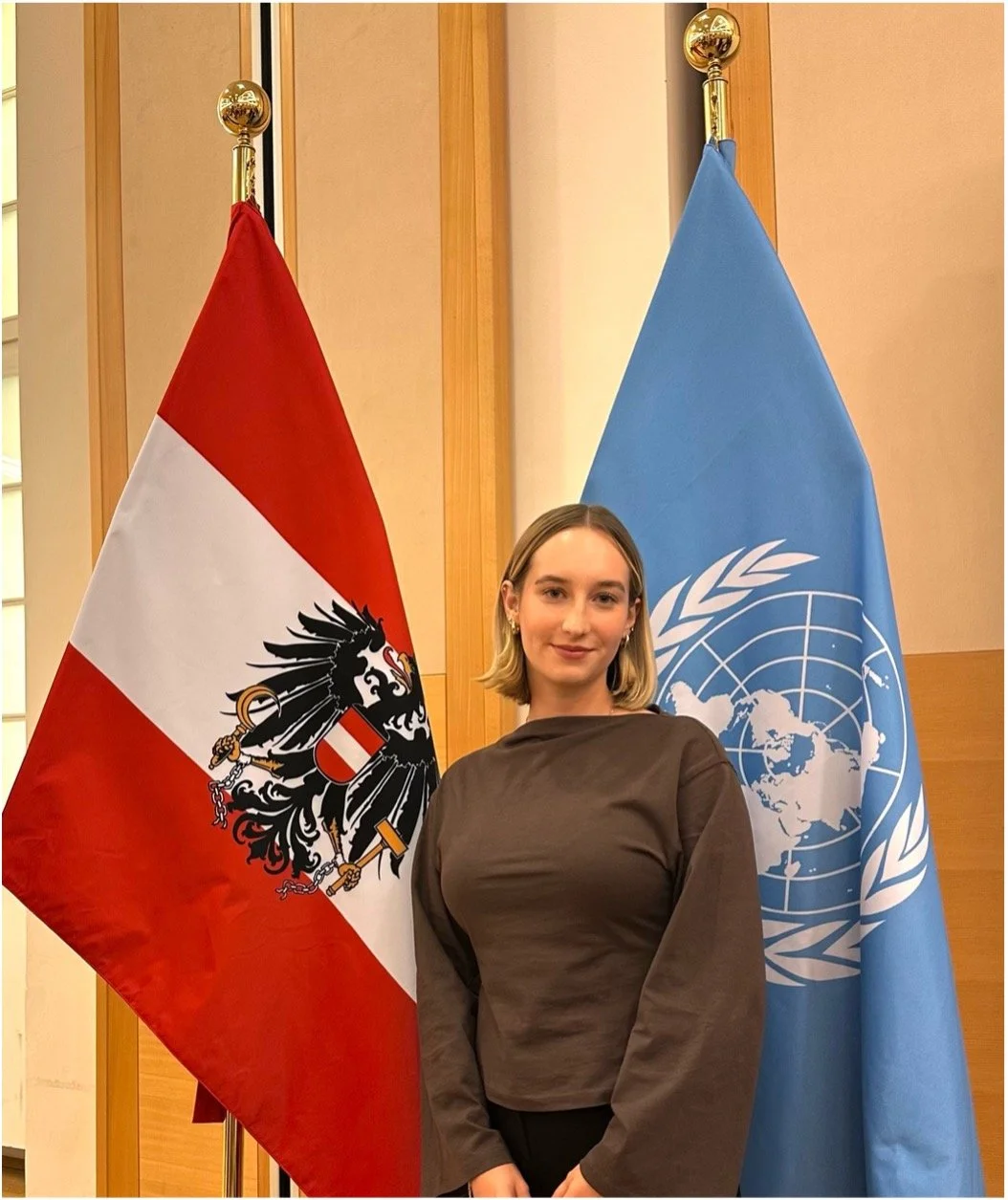
Katharina Hetzendorfer is a student of International Relations and business law in Vienna. She holds a Bachelor degree (LL.B) from the Vienna University of Business and Economics. Within her studies, she focuses on human rights law, peacebuilding and gender issues. She further expanded her expertise in these fields through an internship at the section for women in the international justice system at UNODC (United Nations Office on Drugs and Crime). Katharina has worked in renowned law firms before and is currently employed at Der STANDARD, where she specialises in media law.