It is evidently much too early to evaluate the Iran war and its multiple political, economic, and military consequences. But some thoughts about the decisive turning points in the global relations and especially for the strategies of the European Union are possible. Also, a brief reflection about the ‘necessity’ of this war and if or how it could have been avoided is possible—and this will be my starting point.
Iranian Revolution and its Regional Consequences
Since the success of the Iranian revolution under the leadership of Ayatollah Khomeini, Iran’s political activities became a divisive issue for the region. Iran’s combination of its nuclear aspiration with its continuous threats against Israel, its interference in foreign countries especially in Lebanon, and, later, with its support—together with Russia—of the Assad regime in Syria characterized a revolutionary and aggressive foreign policy. One must understand that it is that particular mix of aggressive elements of its foreign policy, in combination with its efforts to come as close as possible to acquiring nuclear weapons, which created or at least enhanced tensions and fears amidst the Middle East.
The nuclear issue stood for many years in the focus of international efforts to find an agreement with Iran. And in 2015 with the JCPOA accord signed in Vienna it seemed that a satisfactory solution had been found. But the Israelis and especially its long-term Premier Netanyahu were always critical of or rather outright opposed to that agreement. Finally, Donald Trump cancelled the U.S. participation during his first term and made the agreement worthless. In reality already back then the ground for this years’ war against Iran was laid.
During all the different U.S. presidencies, since the nuclear efforts of the Iranian regime became visible, U.S. intelligence personnel—parallel to and sometimes in cooperation with the Israel‘s undertakings—was sabotaging the Iranian efforts to come close to building a nuclear bomb. They tried—with some success—to convince Iranian nuclear scientist to surrender to the U.S. Many of those who were not ready to accept the U.S. ‘invitation’ were killed. Some by the U.S. themselves but many more by the Israelis according to a recent detailed documentation by “The New Yorker” (April 6th, 2026). But all these illegal killings could not stop Iran’s nuclear efforts and Netanyahu’s insistence on bombing the Iran nuclear facilities.
Lack of Common Western Strategy
The basic problem was—and is today even more—the non-existence of a common Western strategy about how to deal with the different conflicts in the Middle East! Most importantly, there was and still is no common attitude towards Israels reluctance to grant Palestinians living in Gaza and the West Bank basic rights. Netanyahu’s different governments were and are even severing its destructive occupation policy. This violation of basic principles of humanity and of international law was and is used by the Iranians to strengthen their influence amidst the Palestinians especially among the followers of the terrorist Hamas. With this policy Iran presents itself as the only effective supporter of the Palestinians.
Consequently, there was no common Western policy how to deal with the aggressive Iranian interference in supporting the destructive Hezbollah militia in Lebanon on the one hand and the continuous Israeli military interference in this country on the other hand. Additionally, it was not possible to find a common strategy with the Arab countries—not even with the Gulf countries—in how to deal with Iran. Even today it is not possible to recognize a common policy amidst the Gulf countries—a fact that became clearly visible when the United Emirates decided recently to leave OPEC—not least because of fundamental differences with Saudi Arabia. Also, the Abraham Accords between Israel and some Arab countries, initiated by Donald Trump could bring no unity into the Arab community nor is the present war enhancing a common Arab solidarity!
As Matthew Duss and Zuri Linetsky wrote recently in a comment for Foreign Policy (07.05.2026) under the heading ‘How the Abraham Accords Fueled a New Era of Conflict’: “The Accords (…) undercut the pressure that Arab states were willing to apply to Israel over Palestinian issues; fed the illusion that the Palestinians could be sidelined and regional security assured by investing in friendly authoritarians; and helped Israel establish itself as a regional hegemon whose reckless war making now poses a threat to its own neighbors, to the broader interests of its U.S. patron, and to global prosperity.” Anyway, the region today is even more politically divided than in the past years and that increases the possibility of additional conflicts.
An Illegal and Failing War
The war of Israel and the United States, commonly planned and executed against Iran made things not only worse in the immediate war region, but it widened also the division between the U.S. and the European Union. The more it became clear that the war under the title ‘Epic Fury’ was not delivering any success, President Trump became angry about the lack of European support. But as Scott Anderson wrote in the New York Times–International Edition (May 6th, 2026) Epic Fury became ‘Operation Colossal Blunder’. And Donald Trump is now forced to cut a deal with Iran and many doubt the deal will be better than the JCPOA agreement which he cancelled in his first term of office! Additionally, as Scott Anderson underlines: “(…) any final settlement will almost certainly leave Iran as the de facto gatekeeper of the Persian Gulf—or in other words, in a far stronger position than before Mr. Trump started the war.”
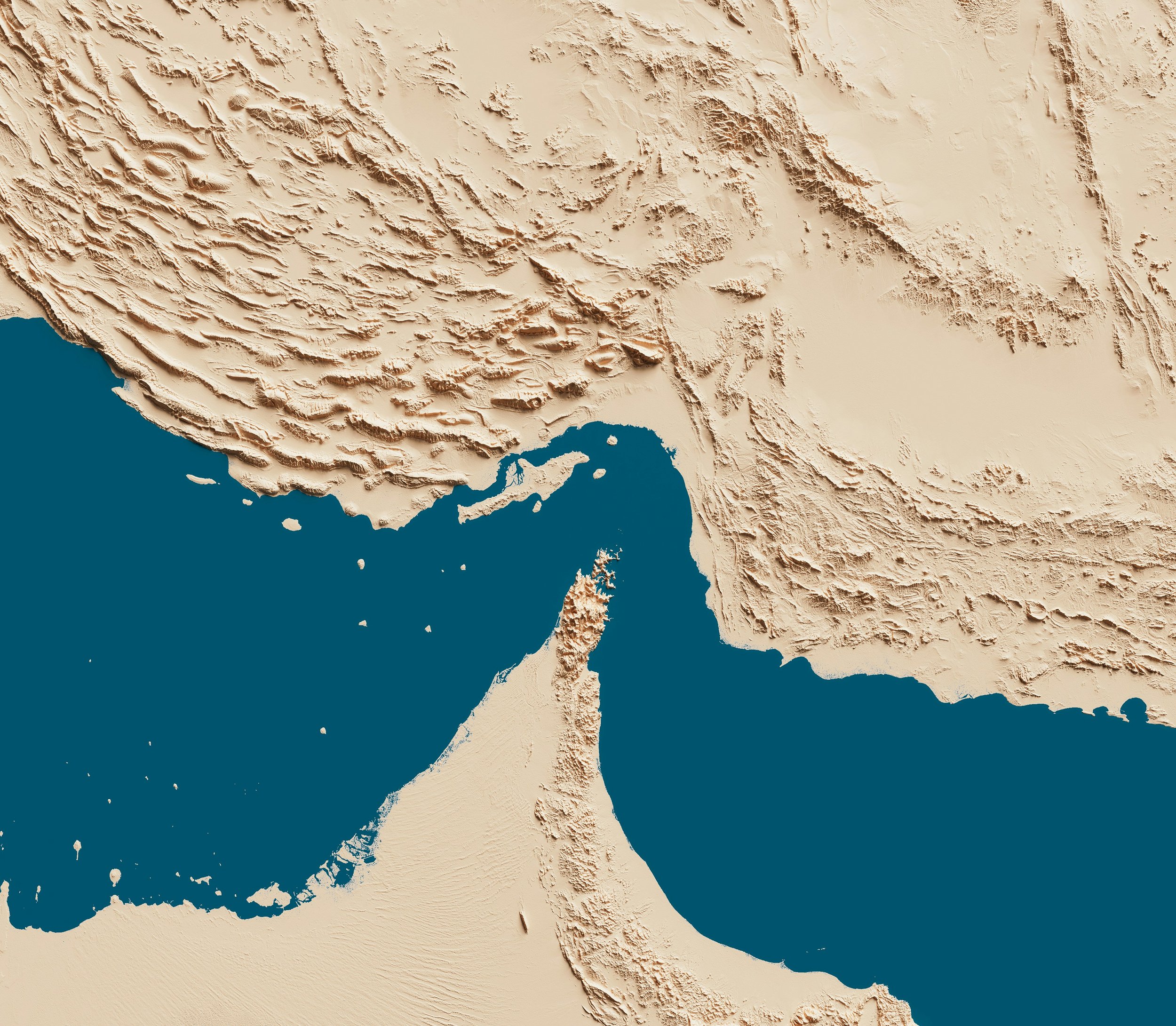
Indeed, it is surprising that so many ‘experts’ who prepared and supported the war did not foresee how Iran would use its regional position to control and finally block the passage of the Strait of Hormuz. This neglect of Iran’s possibility and likelihood to counter the American and Israeli aggression by weaponizing the Strait of Hormuz is proof of the dangerous hubris of President Trump and Premier Minister Netanyahu. Both believe there is no limit for their power to enforce their will.
Chokepoints to be Protected
Iran’s predictable reaction reiterates the necessity to pay more—and with greater responsibility—attention to the importance of different choke points for global trade and finally for peace. We have already seen the negative effects of weaponizing the passages through choke points when the Houthis in Yemen used that instrument in the Bab-el-Mandeb Strait to endanger and torpedo the passage through this strait. And we know how important the Asian passages for international commercial relations are. The Taiwan Strait is of particular importance not only for global trade but also for the issue of peace or war between mainland China and Taiwan. Briefly some Indonesian politicians raised also the possibility to monetize the passage through the Malacca Strait, an act that could have a negative impact on about 40 per cent of the global sea trade. Together with the Iranian efforts such monetizing of Asian passages would be the starting point of creating new hurdles for international trade and deliver another blow to global trade relations.
In respect to all these important and crucial choke points it would be very helpful if there would be an international understanding to strengthening the existing formal multilateral agreement with enforcement rules (!) to ensure that these international corridors are neither monetized nor weaponized. This would not only be in the interest of economic relations and the prevention of trade wars but would also help to preserve peace.
Of course, the other possibility would be that the U.S. takes over—again—the role of the worlds police. Robert D. Kaplan in an extensive argument under the title ‘The tragic decline of the American Navy’ argues for a stronger U.S. navy as “A world united by democracies that uphold a certain standard of human rights is incompatible with a weak navy.” (NYT - Int.Ed. 06.05 2026) And he has a point as the U.S. “has surrendered the control of the world’s vital choke points that it had at the beginning of the 21st century”, especially in view of the enormous growth of the Chinese navy. And it is with great concerns to observe the Chinese activities of deploying additional naval forces and building military installations in the South China Sea.
In my recent blog on the Arctic on this website, I referred also to the increased Chinese interest in that northern area. But I raised also the question if it is wise that the Unites States and the European Union are concentrating their security policy for the Arctic on the military instruments of deterrence and defense. In the interest of peace and security it would be clever if the Western neighbors of the Arctic would jointly engage themselves in building bridges of trust to the other neighbors.
The aim should be to establish a common policy regarding the Arctic and of course to all main chokepoints. Maybe it is illusionary with leaders like Trump, Putin and Xi Jinping to hope for international agreements. And of course, the different guerrilla groups using the chances of weaponizing these choke points—like the Huthis—cannot be easily brought into international agreements, but they could be controlled and their activities checked if the big powers are uniting their efforts to keep the choke points open and free for commercial trade.
Energy, Food Supply and Poverty
The Iran war resulted inter alia in higher prices for energy and fertilizers by reducing the global supply of both commodities. This had its negative consequences for food supply and its prices. All countries are suffering because due to these consequences. But richer countries are despite budget constraints, able to finance some compensating measures for the poorer parts of their population. Things are different in poorer, highly indebted countries.
The blockade of the Strait of Hormuz which resulted not only in higher fuel prices but also in reduced access to medicine and fertilizer enhanced the already precarious food supply and poverty in many poor countries. The Green Revolution meant that food production became more dependent on the supply of fertilizers. But about 30 per cent of global ammonia exports—widely used for fertilizer production—originated in the Middle East and the recently concluded leasing agreement of a big grain storage and processing facility in Abu Dhabi is demonstrating the importance of the region for global food supply.
This interruption of fertilizer supply and consequently the increase of hardship especially for African farmers comes in addition to the already implemented cuts of aid to poorer countries primarily by the United States after Donald Trump took office but also by many European countries. Furthermore, the poorer countries have nearly no financial capacity to compensate the decreased support for their farmers and to help the poor families and their hungry children.
It is also the poor countries and their population who is suffering due to the increased energy prices. Considering the necessity to combat climate change there is hope, that the steeply rising prices for oil and gas will support the switch to production and use of low-carbon energy - especially by using wind and sun for producing energy. But this energy depends also on functioning global supply chains as they need rare earths, batteries and photovoltaic panels. And one should not forget that electrified energy systems—beyond local production and consumption—are highly vulnerable to cyber-attacks and need therefore sophisticated and expensive counter technologies to be installed.
A New World (Dis)order
The war in the Middle East lead—again—to an oil shock, the fourth one since World War 2. This time it has created already more disruptions in comparison to the first ones. In addition to the already mentioned interruptions of the supply of oil, gas and fertilizers one must mention the interruption of the flow of helium which is essential for the semiconductor production. And as Guiliana Chamedes underlines (Foreign Policy 04.05. 2026): “Unlike earlier oil crises, which strengthened Western unity, the current situation is fragmenting it.” And she adds: “So far, it seems as though China and Iran—not Israel and not the United States—are the winners of this war.”
Concerning Iran, the regime or at least the Revolutionary Guards may be on the winning side, certainly not the population. Especially if we consider all the destructions due to the bombing by Israel and the U.S. and the enormous costs of reconstruction. It is not yet clear if China is the big winner and in particular what role China will in future play in the Middle East. China mediated an agreement between Saudi Arabia and Iran in 2023. But with the newest war this agreement broke down, even if Saudi Arabia is trying to avoid any direct confrontation with Iran—opposite to the attitude of the United Emirates. And China is rather reluctant to take any clear position. Maybe it will try to leave all its options open for the time after the war.
What seems clear for many observers is that the erratic behavior and obvious helplessness of Donald Trump—also during the different phases of this war—is showing an ‘American empire in decline’. Under this title Christopher Caldwell defines the American Israeli attack “more than a bad idea; it has turned into a watershed in the decline of the American empire” ( NYT Int.Ed. 05.05 2026). It is somewhat surprising that the President of MAGA—Make America Great Again and of America First became a President of overstretching and overextension America’s possibilities.
Additionally, the world is confronted with a non-professional and partly corrupt way of dealing by the United States with the world’s conflicts. As Ivan Krastev wrote recently with reference to Steve Witkoff und Jared Kushner: “Special envoys are the new peacemakers because they are unburdened by expertise and un constrained by bureaucratic process (…) The fact that they talk all the time about business should make the world believe that they mean peace”(Financial Times 9/10 May 2026).
How Should Europe React?
Especially for Europe this erratic overstretching creates two challenges. First, Europe was used to a strong—even if sometimes disputed—alliance with the United States. Economic differences or disputes about stationing of wide-ranging arms on the European continent could always be solved. The ongoing trade disputes with President Trump, his reiterated threat to leave NATO, the doubts about the application of the assistance clause of Art 5, the announced withdrawal of American troops from Europe and political interference into domestic politics of several European countries will certainly not help to increase trust and confidence into the United States as a partner and ally.
Secondly, the European Union was built on the basis of rules and a bureaucratic order. Erratic and nationalist policies should be avoided and even prevented. Furthermore, Europe hoped to be able to ‘export’ its basic non-nationalistic philosophy including its laws and regulations. This should be possible due to its economic weight and by convincing other countries in the framework of multilateral organizations and agreements. But with the erratic policies of Donald Trump—also with regard to Russia and China—and his undermining of international order and especially by leaving many international organizations, Europe has lost a partner for its ‘rules based’ philosophy and strategy.
As Mark Leonhard wrote recently in his new book ‘Surviving Chaos: Geopolitics When the Rules Fail’: “Rather than being governed by shared rules, the international system is beset by episodic bursts of coercion and retaliation.” The new order is no longer characterized by rules—which to be honest have been again and again broken—but by the fact that no longer agreed-upon rules even exist.
Because of this new situation ‘Europe’s Outdated Playbook’ has to be changed. Europe does no longer need ‘architects’ who are developing and creating well designed structures in a predictable world. What Europe needs instead are pragmatic and flexible ‘artisans’ who are able to act successfully in today’s world of uncertainties and changing conditions. For Mark Leonhard, “China is the leading exponent of this view, but the same logic appears to drive many rising powers, from India and Turkey to Saudi Arabia and South Africa.” Europe should adapt to this new world better sooner than later. Of course, Europe cannot and must not adapt to the unprofessional and corrupt way of dealing of some countries and special of the U.S. But a more pragmatic way of dealing with the world as it is will be necessary
But is Europe able to realize and manage this transition? The European Union was not only building a community on basis of rules but developing foreign relations on rules and in promoting its own rules globally. It would be a dramatic change for the European Union and its basic DNA to leave that attitude behind. Mark Leonhard is nevertheless optimistic: “Europe is better equipped for this world than it realizes, as its history, institutions, and political culture reflect deep traditions of adaptations and resilience.”
Well, I would hope so, but the legalistic and bureaucratic structure and decision processes were not chosen by chance. Even if this approach could not prevent complicated political disputes and bargaining processes it could smoothen these processes by giving it a legal framework. In the new world to which the European Union must adapt, the different opinions about the aims and directions of these policies will play a bigger role. Nevertheless, it will be certainly necessary to adapt to the new world without accepting and imitating policies of violating international laws and breaking international agreements.
As mentioned above we need even more multilateral agreements and organizations if we want to avoid a rising global chaos and risks of new conflicts and wars. To be more pragmatic should not mean to throw all rules overboard but to be open for compromises which do not violate international law and principles of humanity. But the European standard should not be the only criteria for an agreement.
Especially concerning the Middle East Europe should try to strengthen the ties to all countries to help to create a peaceful balance at our neighborhood. Only if all countries of the region and all groups - especially the Palestinians and the Kurds but also the Druzes etc.—can find a place where their basic rights and needs are respected, can the region—step by step—come to peace. Europe with its experience of overcoming nearly unsurmountable hurdles could help to manage this process. It is a process where we do not yet see the detailed outcome. But the process must be started, and some principles be respected. And at the start one should investigate the vast number of possible agreements from energy to water, from transport to housing from education to science etc. Important is that the fields of cooperation must involve and benefit all parts of the societies. No one should be left out as otherwise we European just can wait for the next war in our immediate neighborhood.
Yes, for the moment all these possibilities and chances seem to part of an illusionary world. The continuation of the present wars and even new wars in the Middle East seem to be more realistic than peace and cooperation. But the “European” dream should never be given up as having something to say to other regions as well. And as Europe demonstrated and should demonstrate it even more in the future realism and dreams are compatible.
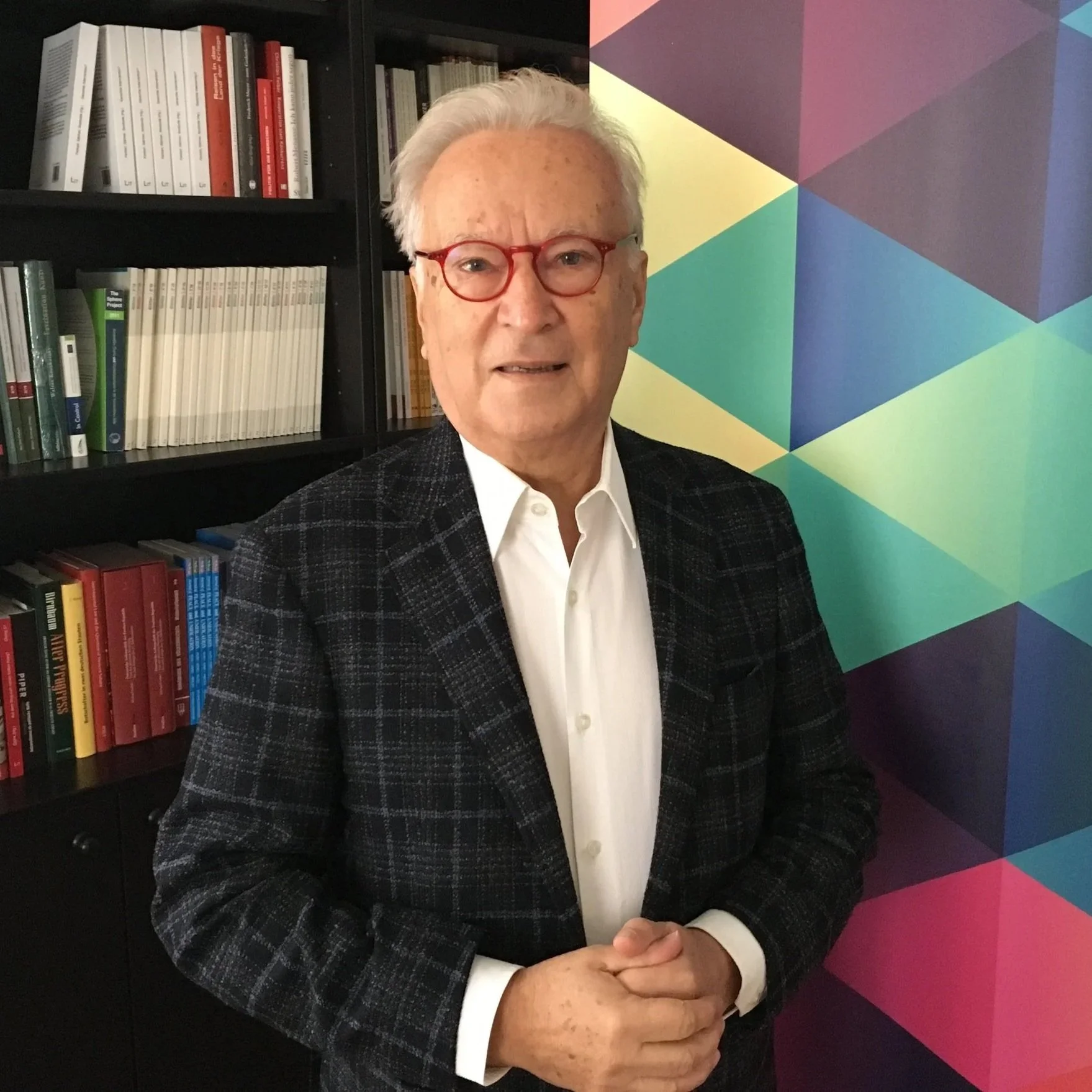
Dr. Hannes Swoboda, President of the International Institute for Peace (IIP), started his career in urban politics in Vienna and was elected member of the European Parliament in 1996. He was Vice President of the Social Democrat Group until 2012 and then President until 2014. He was particularly engaged in foreign, enlargement, and neighborhood policies. Swoboda is also President of the Vienna Institute for International Economics, the Centre of Architecture, the University for Applied Science - Campus Vienna, and the Sir Peter Ustinov Institute.