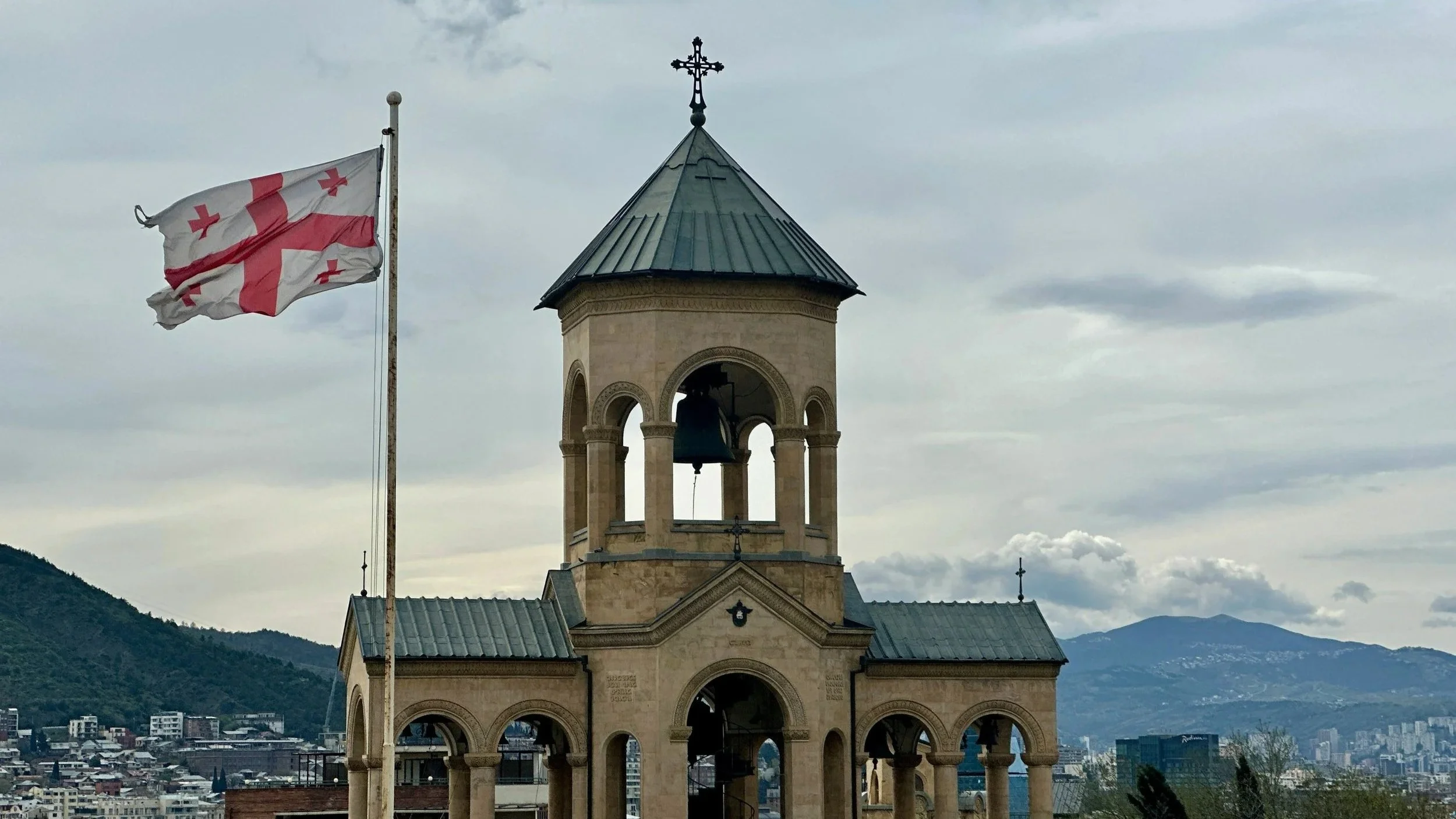
“Every rose will fade and wither, no matter how fair it once was. The dry rose falls within the garden, a new rose arises there.” These poetic lines from Georgia’s national epic, The Knight in the Panther’s Skin by Shota Rustaveli, speaks to the cyclical nature of renewal and decline. Yet today, the promise of Georgia’s 2003 Rose Revolution—once the region’s brightest hope for liberal democracy—appears to have withered. The country, which still aspires to join the European family, now faces a starkly different reality under the ruling party ‚Georgian Dream‘.
Since 2012, Georgian Dream, founded by oligarch Bidzina Ivanishvili, has transformed from an anti-corruption movement into what the latest V-Dem Democracy Index now describes as an authoritarian regime. Political prisoners, violent crackdowns on protesters, and elections marred by irregularities—as noted by OSCE observers in 2024—have become hallmarks of its rule. The recent “foreign agent” law, which criminalizes NGO activity, further underscores this shift. By oppositional Georgians, the foreign agent law is referred to as the “Russian law,” referencing a very similar law was passed by the Kremlin in 2012. In Georgia, the law's effects are similar. Organisations that receive more than 20% of their funding from abroad are marked as foreign agents. In a post-Soviet country where fear of foreign influence remains, it is almost impossible for NGOs to operate in Georgia. Even though the law claims to bring transparency to the NGOs’ finances, the effect on civil society actors, who remain active, can be very physical: Graffiti on office walls, freezing of bank accounts, and violent harassment by violent Russian-friendly groups who physically attacked NGO members. These black-dressed, masked men were continuously attacking, especially journalists, at the mass protests in 2024 and can be compared to the so-called Titushky in Ukraine at the Euromaidan protests.
The question remains: how did a country with such democratic aspirations reach this point?
Georgia’s geopolitical position—bordering Turkey, Armenia, Azerbaijan, and, most critically, Russia—has long shaped its national psyche. Historically, Georgia has been occupied by empires: the Byzantines, the Arabs, the Mongols, the Ottomans, and, finally, the Russian Empire. The mentality of the need to defend one's own national survival against overpowering neighbours is still vivid in Georgia today. Hence, migration and alleged European influence on traditional family models are discussed as a question on the defence of national identity in Georgia. After a short period of democratic independence after World War I, the progressive First Georgian Republic was brutally annexed by the Red Army in 1921. It is worth noting that the Democratic Republic of Georgia was ruled by the first parliament, whose national minorities—such as Armenians, Abkhazians, and Muslim women and others— were represented. The Social Democratic Party's rule in Georgia was closely watched in Western European politicians, especially social democrats of that time. Yet, this period of freedom was soon interrupted, and Georgia was violently incorporated into the Soviet Union by the Bolsheviks. For the Soviet leaders at that time, a successful neighbouring Menshevik government was seen as a threat to their own Bolshevik authority. Enthought, a partisan movement was created around the former minister of defence, Kakuza Tscholoqaschwili, the Red Army eventually crushed the resistance.
Since regaining independence in 1991, Georgia has endured multiple conflicts, like Russian-backed secessions of Abkhazia, so-called South Ossetia, Adjara, and most recently Russia’s 2008 invasion. During the five days of fighting, the Russian forces almost captured the Georgian capital, Tbilisi. Only Western mediation led by Sarkozy’s EU mandate stopped the Russian soldiers from fully annexing Georgia. This legacy of the external thread fuels a deep-seated fear among Georgians, who closely watch NATO and EU actions in Ukraine, knowing their own security depends on external support. Hence, it would be a small effort for Russia to conquer Georgia with its 3,7 million citizens, within days.
Georgian Dream has capitalized on this fear, framing its rule as the only alternative to war. During the 2024 parliamentary elections, the party’s campaign posters contrasted bombed Ukrainian cities with pristine Georgian buildings. The posters were titled: “Say no to war.” The government promotes a conspiracy theory of a “global war party,” claiming that Western forces seek to drag Georgia into conflict. Similar to Victor Orban, the GD triggers a fear of the next global war, where the West is pressuring countries close to Russia to support a war with Russia, even though it is Russia that started the war in Ukraine. Despite widespread Georgian fury toward Russia—fuelled by its de facto control of 20% of Georgian territory—the GD government frames its approach as one of cold rationality: Russia, it insists, is a neighbour with whom dialogue is unavoidable. Yet while the government publicly emphasizes sovereignty, Bidzina Ivanishvili seems to copy the exact anti-democratic policies from the bigger neighbour in the north.
For two years—from 2024 to this day— daily protests had erupted against the government, accused by protesters of betraying Georgia’s European future and turning the country into a Russian puppet state. What triggered this uprising was the Georgian government's announcement to put the EU accession process on hold, ending a period of slow integration after Georgia was accepted as EU accession candidate in 2023. The tables turned as the enthusiasm for Europe turned into disappointment as the GD decided to deviate from the European path. Following, tens of thousands of protesters took to the streets. To this day, protests continue in front of the parliament. The response by the police has been brutal: injuries, arrests, and institutional repression. The undermining of democratic institutions continues: A proposed university reform, for example, aims to centralize control over research, eliminate international cooperation, and transform universities into elite training centers rather than critical institutions. It seems like the Georgian Dream has studied the authoritarian playbook well. At breakneck speed, the government turned Georgia from a promising republic into an oppressive authoritarian state.
After a series of condemnatory statements, the EU has tightened visa restrictions for Georgian officials, while the UK has sanctioned GD-affiliated TV channels, forcing them to relocate their servers abroad. Meanwhile, the OSCE’s "Moscow Mechanism" report delivers a scathing assessment of Georgia’s human rights situation—though its lack of legal binding limits its immediate impact.
Yet as the world grapples with multiple crises, Georgia risks becoming a blind spot for the EU. Some member states argue for prioritizing internal reforms over expansion, but this must not come at the cost of ignoring Georgia’s democratic aspirations. The most effective long-term strategy for the EU may be to demonstrate its willingness—and capacity—to protect neighbours with democratic ambitions in the face of external aggression.
In Georgia, the war in Ukraine and Western responses are watched closely. The GD government portrays EU states as hesitant and unable to defend Ukraine, fuelling a dangerous narrative: If the West cannot protect Ukraine, why should Georgia risk reforming into a liberal democracy and severing ties with Russia? Georgia’s EU integration process is thus inextricably linked to Ukraine’s fate. Until the war’s outcome becomes clearer, the EU must actively support Georgia’s civil society—the activists, NGOs, and protesters facing repression. Only by ensuring their survival can Georgia’s democratic aspirations—its "new rose"—begin to flourish once more.
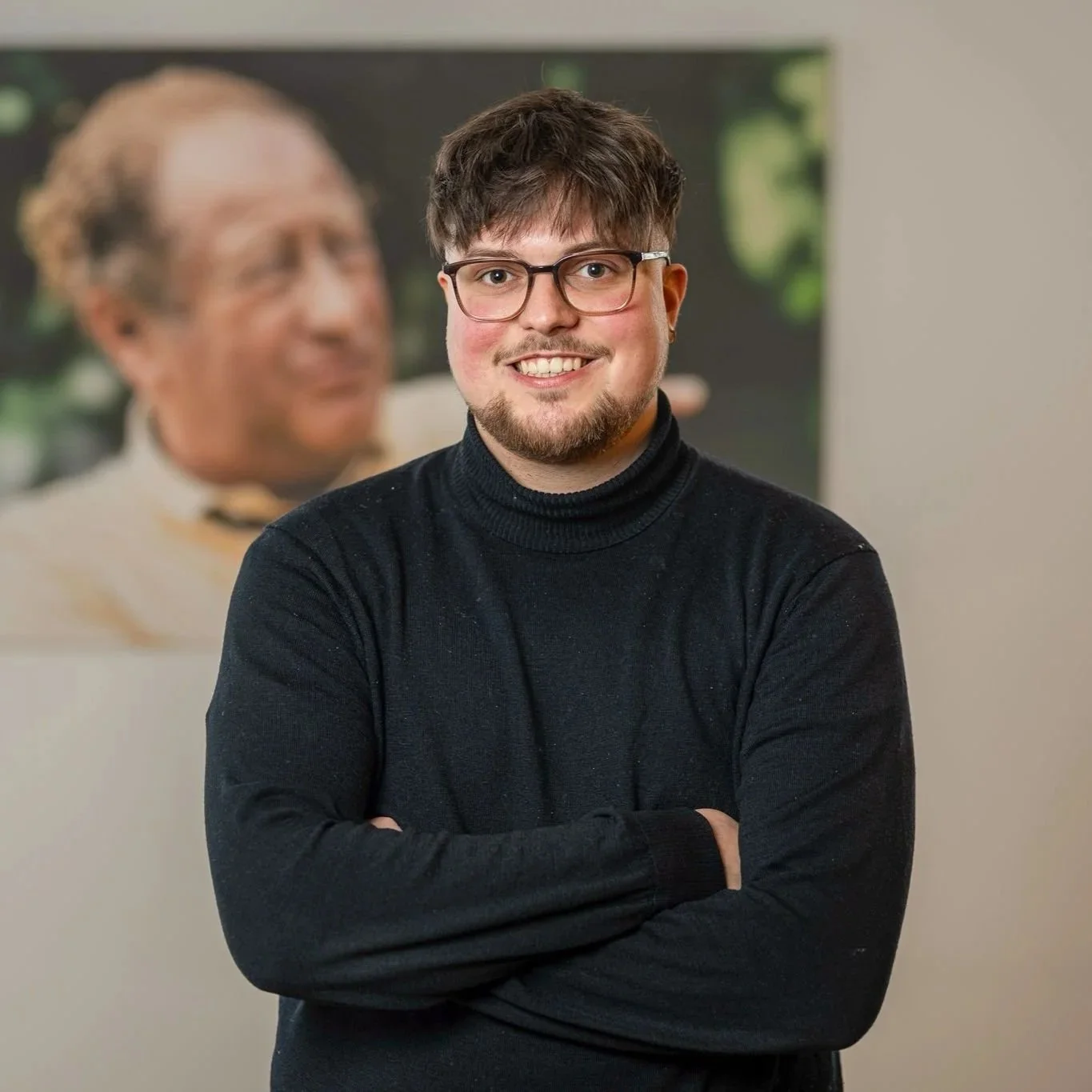
Till Hartig is a student of international development specializing in the South Caucasus region. During his studies in law and politics at the European University Viadrina, he participated in an ERASMUS+ exchange at Tbilisi State University in Georgia. He further expanded his expertise through internships at the Rondeli Foundation (international politics) and MediaVoice (Georgian anti-disinformation think tank). In Vienna, he interned at the United Nations Association Austria and the Paulo Freire Zentrum, where he continues to publish on development issues. Since 2024, he has worked as a student assistant at the Bruno Kreisky Forum for International Dialogue.