The nature of power is changing faster than the institutions and conceptual frameworks of international relations. Contemporary warfare reveals a growing contradiction between the increasing empowerment of individuals and societies through technology and the continuing elitist, state-centric and increasingly personalized character of international relations. As material power becomes less dependent on territory and physical resources, the ability of states and autocratic leaders to control societies through territorial conquest and military force becomes increasingly problematic. The alternative is not simply greater military deterrence, but greater engagement with societies themselves—through recognition, inclusion, dignity and co-creation.
The wars in Ukraine, Gaza and Sudan are taking place amid geopolitical rivalry, technological transformation, a crisis of political leadership and declining international authority. At the same time, individuals and societies have unprecedented opportunities to express themselves, organize, influence narratives and produce value through digital technologies. Societies are therefore becoming increasingly empowered while international relations remain largely organized around states, elites and political leaders whose authority is increasingly contested.
The contemporary character of warfare reflects this contradiction. Wars have not disappeared but have become more prolonged and difficult to resolve. Technological innovation has contributed to the “democratisation and diversification of war”[1], involving states and non-state actors, drones, hybrid operations and other forms of warfare. Technology has also blurred the boundaries between peace and war and between internal and external threats[2]. At the same time, information technology and artificial intelligence are making territory and material resources less decisive as sources of power. Borders have become more permeable, and competition increasingly takes place in virtual space. The added value of states is therefore increasingly connected to what their citizens can produce through technology, knowledge and creativity rather than simply to the size of their territory or material resources.
This produces a fundamental paradox. While technology is creating new forms of power based on information, connectivity and human creativity, states and leaders continue to rely on military force, territorial control and coercion. Territorial conquest may provide physical control without producing control over people's choices, identities or aspirations. The inability of autocratic regimes to create attractive models of governance encourage them to divert attention from the quality of life toward the size and power of the state. Hybrid warfare then becomes a means not only of achieving material objectives through disruption but also of extending a sense of control across borders.
The wars are also taking place amid a crisis of leadership and the increasing personalization of political power. Populism, identity politics, declining democracy and weakened institutional checks and balances have increased the importance of political personalities and emotional identification. Social media rewards simple, dramatic, visual and personalized messages, giving advantages to leaders able to compete through charisma and performance. The weakening of institutional constraints makes international affairs more dependent on individual leaders, particularly in major powers, with personalization trend extended to the behaviour of states.[3] Geopolitics and transactional approaches to international relations reinforce this tendency by emphasizing states and their leaders while neglecting societies evolving as independent agencies.
At the same time, the “virtuality” of power along with personalization of power and states increasingly challenges identification with nation-states. Digital technologies enable individuals and communities to develop identities and relationships beyond national borders, while technological change raises questions about traditional concepts of sovereignty. This creates another contradiction: political institutions remain organized around territorial states while many of the most important activities and sources of influence increasingly transcend those boundaries.
The war in Ukraine provides a particularly important example of societal agency. Ukraine demonstrates that military resilience depends not only on state institutions but also on civilians, volunteers, technology producers and wider society. The use of drones and decentralized technology has created new forms of cooperation between military and civilian actors, giving more people a stake in national security and military strategy[4]. Russia's territorial gains have not automatically produced control over Ukrainian choices or identity. Military resilience remains essential for defending sovereignty, but in this case sovereignty also means the right of society to determine its own political choices.
The Ukrainian case therefore demonstrates the limits of diplomacy that deals primarily with governments. Negotiations cannot fully succeed if they do not take into account the needs, attitudes and resolve of the society affected by the conflict. Societies are increasingly capable of independent agency, while bilateral diplomacy and international institutions remain largely designed to deal with governments.
Digital technology is also transforming political identity and the sources of power. Social networks allow individuals who previously faced barriers of class, education, geography or institutional access to become influential. Anyone can potentially become an influencer, entrepreneur, artist or political communicator. This democratization of visibility can empower societies, but it also increases pressure on political leaders, encouraging populist and performative forms of communication.
The rise of populism and the decline of democracy, however, should not automatically be interpreted as evidence of the failure of liberalism or the universality of liberal values. The problem also lies in the way the West has approached other societies. In relations with energy-rich and authoritarian states, economic and strategic interests have often taken precedence over democratization and human rights. Such policies have weakened the credibility of liberal values.
The alternative is to reconsider soft power: from influence to co-creation. Liberal values should not be treated as something exported from the West to the rest, but as universal principles whose development can involve equal participation by different societies.[5] International relations should therefore be assessed not only through trade, security agreements or diplomatic outcomes, but also through whether they create conditions for freedom, dignity, participation and the realization of societies' creative and reform potential.
Military resilience remains necessary. Increasing defence capabilities is important for deterrence and sovereignty, but it should be complemented by proactive normative policies and engagement with societies. Engagement with authoritarian leaders may produce tactical agreements without addressing the deeper causes of conflict, particularly where war serves regime security. Preventing future wars therefore requires competition for the “hearts and minds” of societies, but this competition must be consistent, equitable and inclusive.
This transformation can be understood through the contrast between Homo Pugnans and Homo Partum. Homo Pugnans represents the traditional understanding of power through fighting, domination, territorial control and the defeat of others. It is essentially a zero-sum conception in which one actor gains power through the subordination or destruction of another. Homo Partum, by contrast, represents the creative human being empowered by technology and networks, capable of producing value through knowledge, art, entrepreneurship, technological innovation and social contribution.
The significance of Homo Partum is not that creativity will eliminate conflict, but that people can increasingly seek recognition, influence and achievement through creation rather than domination. Social networks give previously unknown individuals opportunities to demonstrate their talents, while communities can generate cultural, intellectual, technological and social value through cooperation. Music, art, innovation and entrepreneurship provide alternative forms of self-realization to military or political confrontation. The deeper competition of the future may therefore be between different ways of directing human ambition and frustration: toward destruction and confrontation, or toward creativity and participation.
The central challenge is consequently not simply how to defeat autocratic leaders, but how to compete with them for and through societies. “Outsmarting” aggressive autocracy requires undermining the basis of its support by recognizing and including societies and asserting the universality of dignity, freedom and participation. This also requires international actors to address their own inconsistencies, including the selective application of human rights principles and the prioritization of geopolitical or economic interests over societal welfare.
The conclusion is that inclusion can become a strategy of peace. Climate change, pandemics, migration, environmental degradation, technological transformation and artificial intelligence do not respect political borders and create shared vulnerabilities. Yet international politics remains organized around national and geopolitical competition. Greater societal participation could help bridge this contradiction by expanding the boundaries within which political identities and international cooperation are formed.
Wars are often sustained by the separation between those who make decisions and those who experience their consequences. Greater participation by societies cannot eliminate conflict, but it can make it more difficult to reduce other societies to geopolitical objects. It can also provide alternatives to the political and psychological attractions of confrontation. This is increasingly important as AI creates both opportunities and new risks, including inequality in access to technology and the possibility that excessive dependence on technological systems could weaken human capacities.
Whether Homo Partum will ultimately displace Homo Pugnans remains uncertain, but technological progress, energy transition and the growing universality of global threats are changing the foundations of power. In this context, greater inclusion of communities, societies and non-state actors in global and regional decision-making may help overcome the exclusionary character of contemporary international relations and create conditions in which human creativity and agency become stronger alternatives to domination and war.
[1] Mats Berdal “ The democratisation and diversification of war. Reflections on the effect of the technological change and normative retrenchment on the character of the contemporary war” Global (Dis)Order international policy programme, British Academy. Carnegie Endowment for International peace.
[2] Jean Mafart Hybrid threats : from geopolitics to internal security, Schuman Papers n.819, Strategy, Security and Defence, Foundation Robert Schuman, 27 January 2026 https://www.robert-schuman.eu/en/european-issues/819-hybrid-threats-from-geopolitics-to-internal-security
[3] The debate on this issue was reflected in such publications as Wendt ,A “ The state as a person in International theory” Review of International Studies, 30(2), 2004.
[4] Nataliya Gumeniuk The Future of Ukraine’s Drone Democracy. Transforming the military has changed the war- and upended Politics.
[5] Leila Alieva 2024 (16 May) Soft Power Lessons from Russia’s wars: How to Overcome Polarization and Strengthen Liberal Democracy, Foreign Policy Center, London. https://fpc.org.uk/soft-power-lessons-from-russias-war-how-to-overcome-polarisation-and-strengthen-liberal-democracy
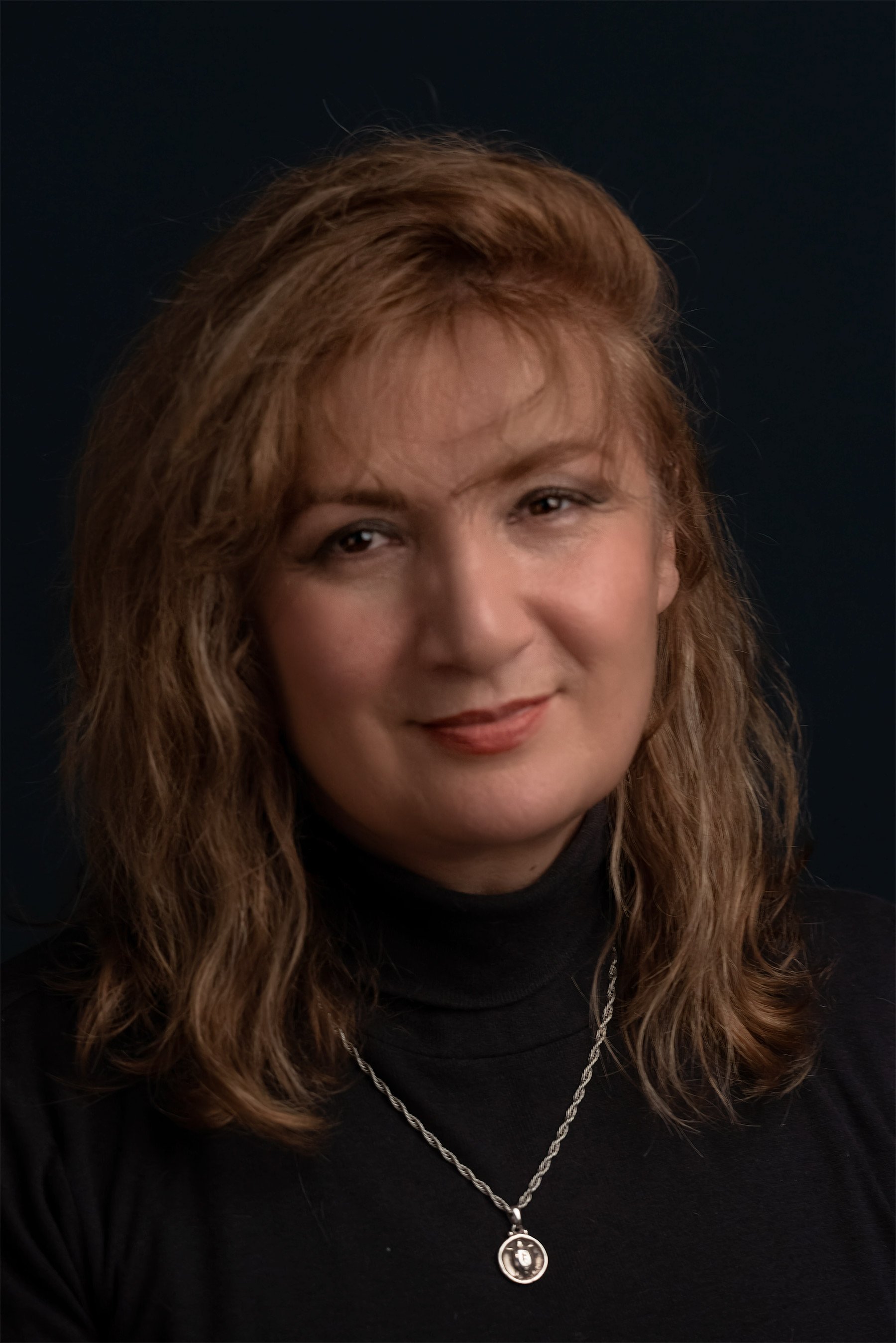
Dr. Leila Alieva is an associate of Russian and East European Studies, Oxford University School for Global and Area Studies, researching Russia, South Caucasus, former Soviet Union, where she taught course “Political Economy of Energy Transition” at the Department for Continued Education and is a Senior Fellow in Peace, Security and Defense at the think tank “Friends of Europe” in Brussels. In 2021-2022 she was awarded a Richard von Weizsacker Fellowship of the Robert Bosch Academy in Berlin, and before that – fellowship in Institute Fur Kulturwissenschaften (IFK) in Vienna. Leila Alieva held research fellowships at Harvard University (1993-1994), UC Berkeley (2000), Woodrow Wilson Center -Kennan Institute- (1995) SAIS -Johns Hopkins University- (2001), NATO Defense College (NDC) in Rome, Italy (2005), National Endowment for Democracy (2008) Her work was published by the Oxford University Press, Sharpe, Jane’s Intelligence Review and many other academic and policy journals and books. L. Alieva is a registered EU expert and frequently spoke at the European Parliament on the issues related to the security, energy and integration in the region.