The International Institute for Peace (IIP) in Cooperation with Dialogbüro, warmly invites you to join us for the public panel event:
Behind Closed Borders: The Domestic Consequences of Russia’s War
DATE: Tuesday, 26. May 2026
TIME: 18:00 CET
VENUE: IIP, Möllwaldplatz 5/7, 1040 Vienna
WELCOME
· HANNES SWOBODA, President, International Institute for Peace (IIP)
· STEFAN MELLE, Director, Dialogbüro
PANELISTS
· KIRILL ROGOV, Political Analyst, Founder of Re:Russia
· VASILY ASTROV, Economist, Vienna Institute for International Economic Studies (WIIW)
· ANGELINA DAVYDOVA , Journalist, Fellow at the Institute for Global Reconstitution, Expert with the Dialogue for Understanding e.V, Observer of the UN Climate Negotiations (UNFCCC) since 2008
· NURIA FATYKHOVA, Head of the Democracy and Gender Democracy Program, Dialogue Office for Civil Society Cooperation
MODERATION
· MARYLIA HUSHCHA, Researcher and Project Manager, International Institute for Peace (IIP)
CONTENT
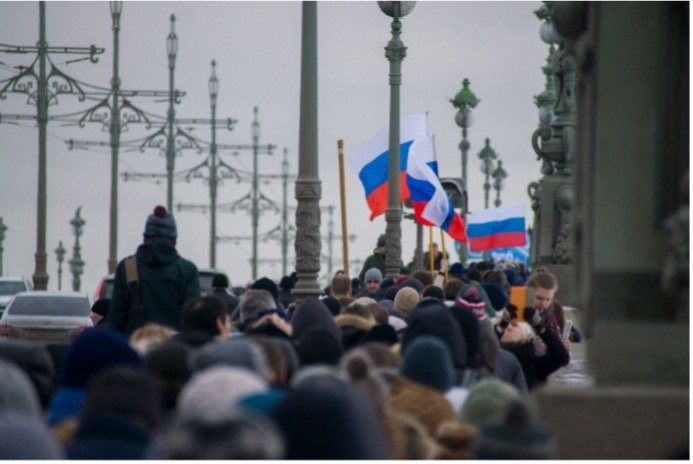
What has happened in Russia after four years of its full-scale war against Ukraine? European headlines report a stagnant economy, a suppressed civil society, and omnipresent military propaganda, but what do these developments actually mean for Russian citizens in their daily lives?
When Vladimir Putin announced the start of the "special military operation" in Ukraine, only a handful of people in Russia had seriously anticipated this decision, and even fewer knew of it with certainty. It came as a shock to nearly everyone within the Russian political and economic elite, and very few embraced it enthusiastically. Nevertheless, the majority accepted the war and supported it, whether openly or passively. Four years of financing the war and resisting external economic and political pressures have dramatically altered the composition and power dynamics of Russia’s ruling class, making it increasingly militarized, loyal, and dependent on the state.
The protracted nature of the conflict and its heavy casualties demanded sustained support from the population. State media propaganda alone was no longer sufficient, prompting the introduction of "military-patriotic" education programs in schools, coupled with intensified repression of alternative or critical opinions and a de facto ban on independent civil society organizations and non-government-controlled media. Political opposition has all but ceased to exist, and the number of political prisoners has skyrocketed.
Western sanctions have severely impacted the Russian economy, but it has largely managed to reorient itself toward the "East," primarily China. Some sectors have even shown growth, largely driven by the surge in military-industrial production, indicating that the new economic model is highly dependent on the continuation of the war. Meanwhile, the civil sector has steadily declined, affecting the welfare of the population and resulting in lower living standards.
This panel will examine how four years of war have reshaped daily life inside Russia. How have society, politics, and the economy evolved under growing state control and militarization? What impact have repression and propaganda had on civil society and public discourse, and how are ordinary Russians adapting to these new realities?
THE EVENT WILL BE HELD IN ENGLISH.
Snacks and drinks will be offered after the event!
Please note that the building’s elevator is out of service. Access to the event space is via the stairs.
By participating in this event, you agree that any photos or recordings taken that include footage of your person may be published or used in any other way by the organizers of the event.